 Call: (724) 912-8151



-
Family-Owned
Locally and family-owned in Hopwood, serving Fayette County and surrounding areas.
-
Free Estimates
Licensed & insured, PA203391. Call (724) 912-8151 for a free estimate.
 Family-Owned
 Free Estimates
Sump Pump Installation
A sump pump is the last link in a basement drainage system. The drains collect the water, the pit holds it, and the pump lifts it out of the house before it reaches the floor. KAE Solutions installs and replaces sump pumps across Fayette County and Southwestern Pennsylvania from our base in Hopwood, together with the interior drains that feed them and the discharge lines that carry the water away. The inspection is free: call (724) 912-8151.
How a Sump Pump System Works
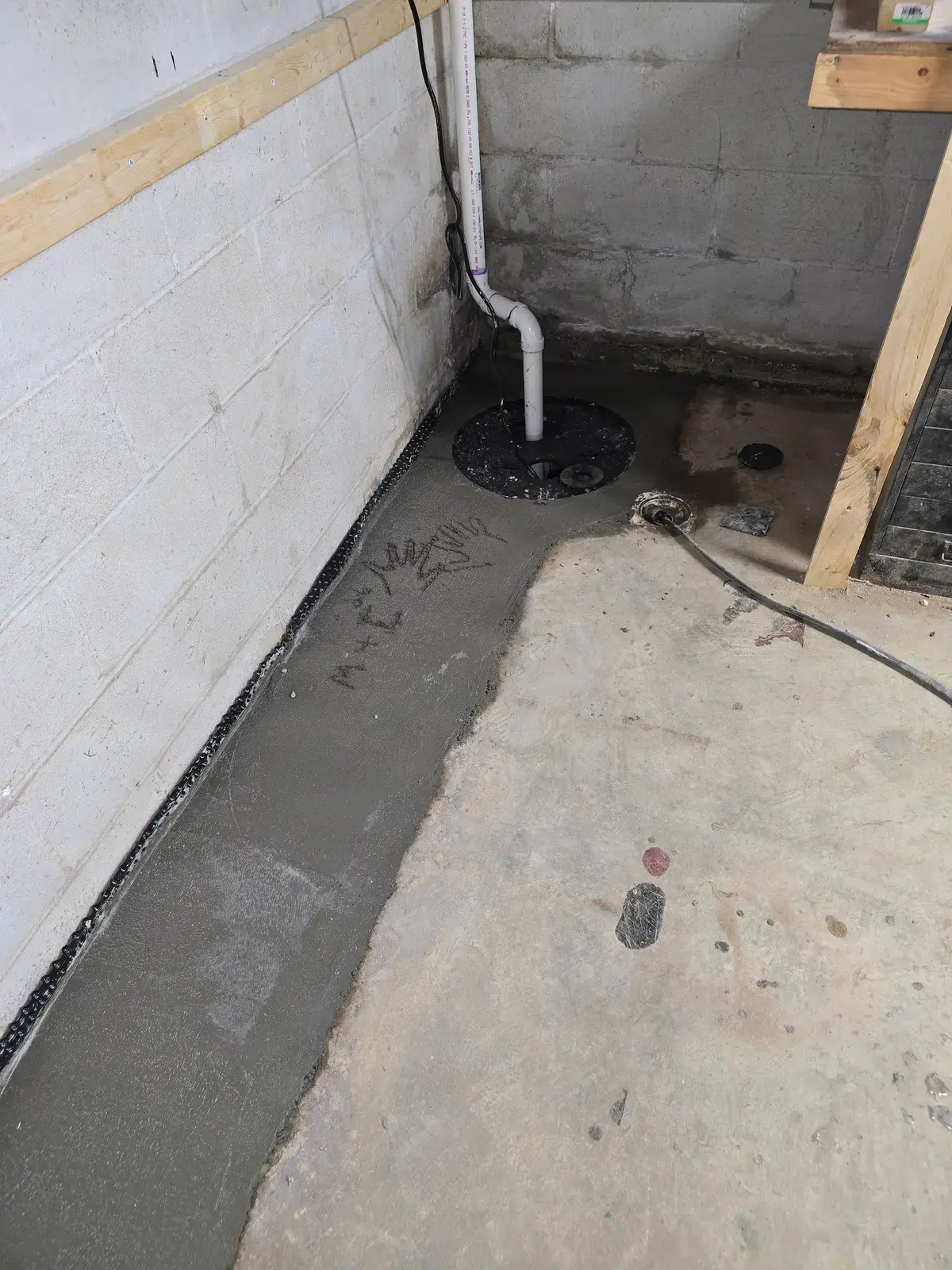
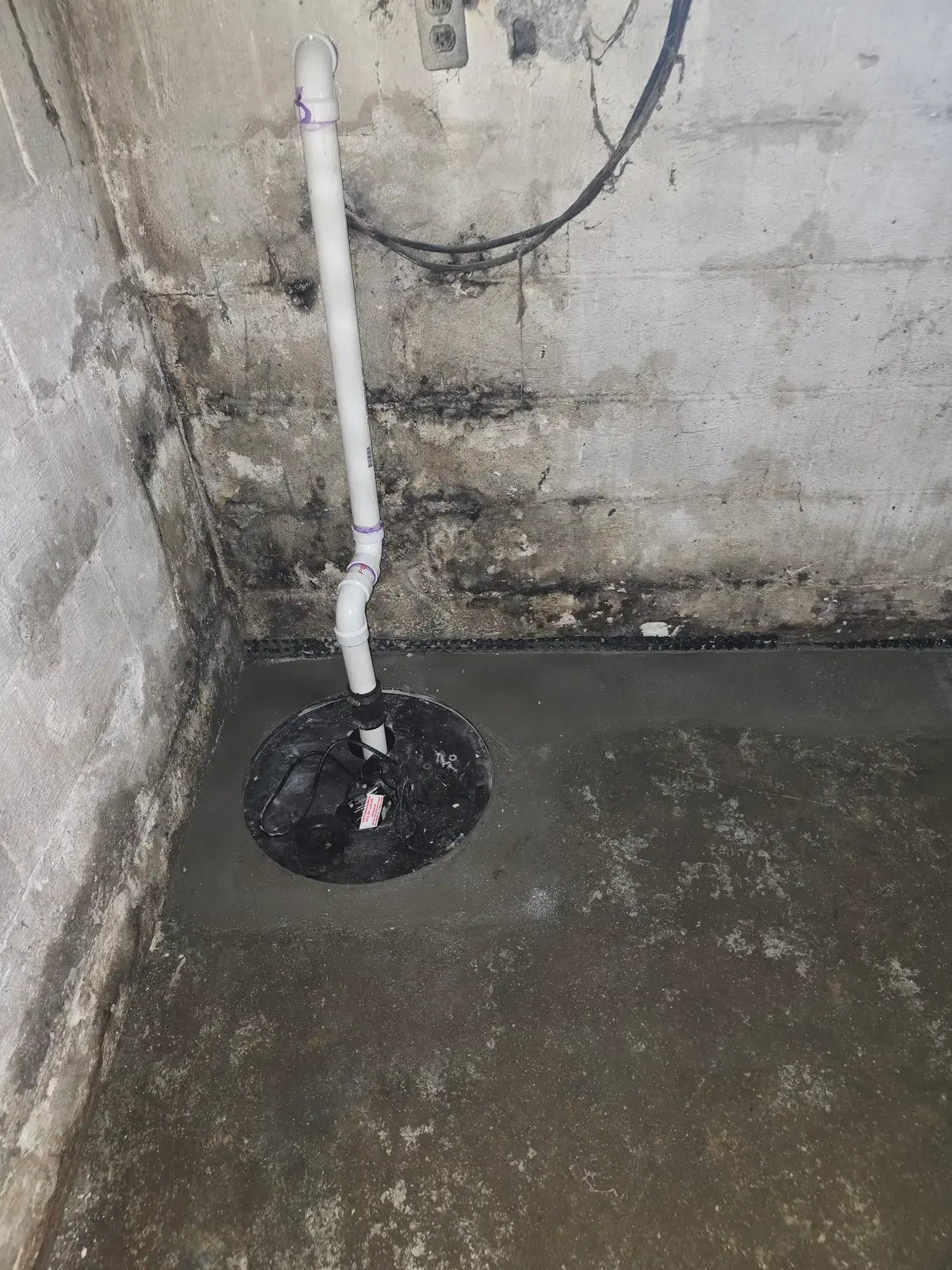
The sump pit is a basin set into the basement floor, its bottom below the slab. Interior perimeter drains along the footing run into it, sometimes with a line from under the floor as well. As the water in the pit rises it lifts a float switch, the pump starts, and it pushes the water up a discharge pipe and out through the wall. A check valve on that pipe stops the water in it from falling back into the pit each time the pump shuts off.
Where the pit goes matters as much as the pump in it. It belongs at the low point the drains can slope to, close to an outside wall so the discharge line has a short run, and where the pump can be reached later for a check or a swap, not boxed in behind the furnace or under a finished stair.
Pennsylvania's building code says foundation drains "shall discharge by gravity or mechanical means into an approved drainage system" (section R405.1 of the 2021 International Residential Code, in force since January 1, 2026). Gravity works when a drain can run downhill to open ground lower than the footing, which some hillside lots have. Most basements sit below everything around them, so the mechanical means is a sump pump.
The ground here keeps pits busy. In Fayette County's soil survey, the water table rises to within about 3.3 feet of the surface on 62% of acres at some point in the year, well above the level of a basement floor. NOAA's normals for the Uniontown 1 NE station count 161.2 days a year with measurable precipitation. In a basement that sits in high ground water, the pump may run through most of the spring.
Signs Your Sump Pump Isn't Working
A pump fails quietly until the day it is needed. In January 2026 we put out a heads-up to Fayette County homeowners: with all the rain and weather swings, basements were showing signs of water, and sump pump issues were on the list next to water on basement floors, musty or damp smells, wall stains, peeling paint and high humidity. At the pit itself, watch for these:
- It never seems to run, even in a heavy rain, while the floor gets damp.
- It runs constantly, or switches on and off every few seconds.
- It hums but moves no water, which often means a jammed impeller or a blocked intake.
- The float hangs up on the side of the pit or on the pump's own cord.
- Water stands in the pit above the level where the pump should have started.
- The discharge line is frozen, crushed or loose outside.
- The pit has no lid, so debris falls in and damp air rises into the basement.
Pour a bucket of water into the pit now and then and watch it start, run and shut off. That simple test catches many of these before a storm does.
Sump Pumps and Interior Drains for Block Foundations
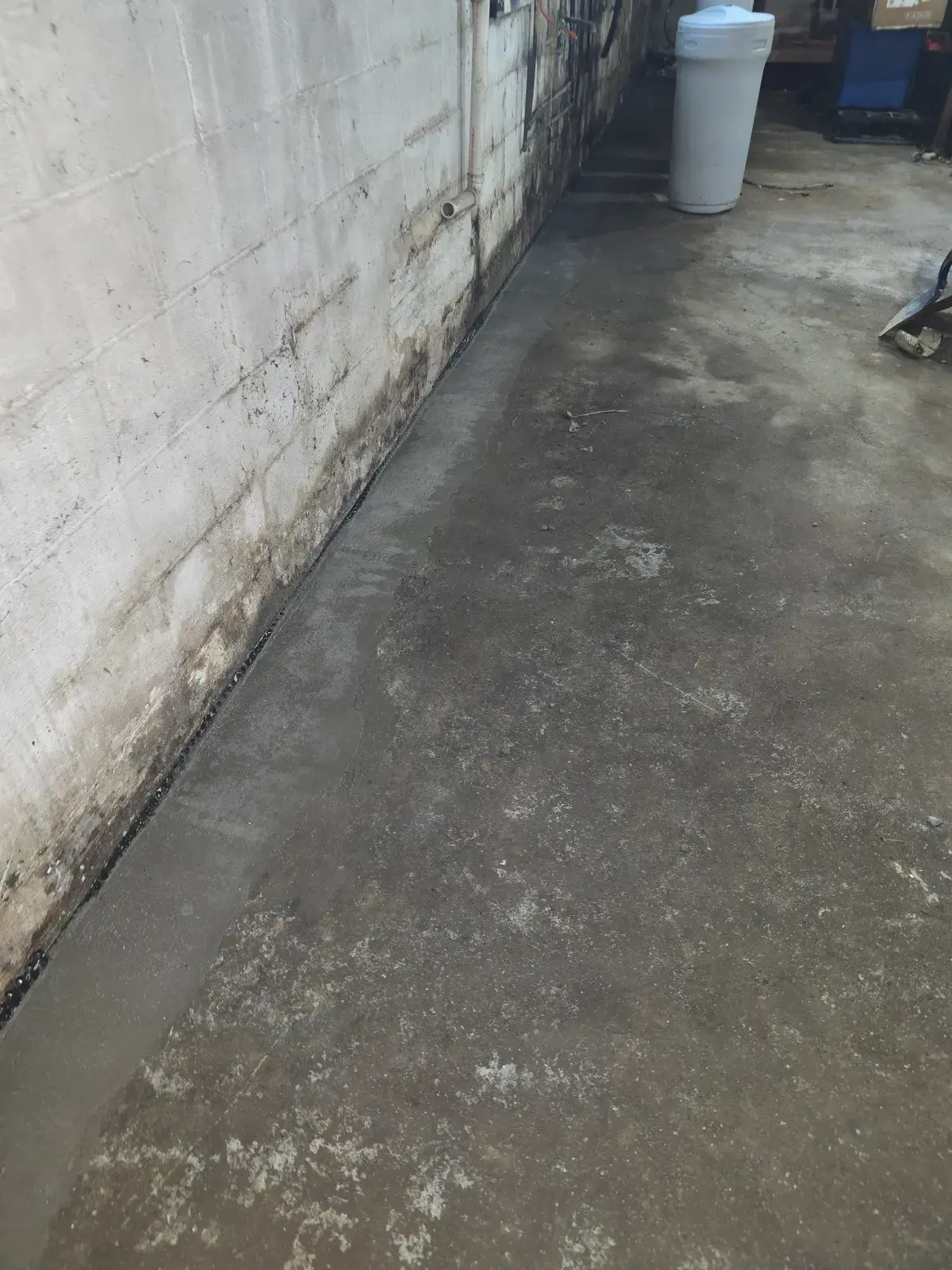
A pump on its own only handles the water that reaches it. Hollow concrete block, common under the area's older houses, takes on water through its face, holds it in the cores and lets it out at the bottom course and the joint with the floor. The fix is a perimeter drain along the footing inside the basement, with weep holes at the base of the block so the cores drain into it, sloped to the pit. A basement with a long perimeter, or water coming in on more than one side, may need more than one pit and pump. One Google review describes that kind of job:
“my basement was leaking water through the block foundation bad, had anthony come out and install interior drains and sump pumps around the perimeter of my basement and he did an awesome job”
Mike C., Google review
The drain work is explained step by step on our interior and exterior French drains page.
Sump Pump Replacement and Battery Backup
Pumps wear out, and they tend to fail when they are working hardest, in a long rain. Replacing one is a chance to fix what made the old one struggle. We check the size of the pit, since a small pit makes a pump cycle too often; the float and switch, and whether they have room to move; the check valve; the discharge pipe and every joint in it; and where the line ends outside. Sometimes the pump is fine and the trouble is a stuck float or a failed check valve, and we'll tell you so. Honest, straightforward advice. No pressure, no scare tactics.
A battery backup is a second pump in the same pit, set a little higher than the main one and run from a battery, so it takes over when the power goes out or the main pump fails. Power cuts and heavy rain often arrive in the same storm. A backup is worth asking about if your basement takes on water fast, if it is finished, or if you are often away from home. Its battery has to be kept charged and replaced as it ages, and it should be tested along with the main pump.
If the pump has already failed and the basement flooded, drying out and repairing walls and floors comes next; see basement restoration.
Where the Water Goes: Discharge Lines in Winter
Pumping water out only helps if it doesn't come back. A discharge line that empties right beside the foundation sends the same water back through the backfill to the drain, and the pump runs in a loop. Pennsylvania's code asks the lot itself to carry water away: section R401.3 says "The grade shall fall not fewer than 6 inches (152 mm) within the first 10 feet." The discharge should let out beyond that, on ground that slopes away, or into an underground line that carries it farther.
Winter is the hard part. The Uniontown 1 NE station records 128.9 days a year with a low at or below 32°F. A discharge line that holds water between cycles can freeze overnight, and a pump pushing against a frozen line can burn out or send the water back into the pit. Lines are run with a steady fall so they empty after every cycle, and an underground line needs an outlet that can't freeze shut or get buried in snow. Roof water is a separate load, and keeping it away from the walls takes work off the pump; our yard drainage and gutter lines page covers it.
A sump pump is usually one part of basement waterproofing, and we install them across Fayette County and Southwestern Pennsylvania, Masontown included. Call (724) 912-8151 for a free inspection.
Is Your Sump Pump Ready for the Next Storm?
Call (724) 912-8151 for a free estimate.
Questions We Hear a Lot

-
It's worth having if your basement takes on water quickly, if it's finished, or if you're often away. A backup pump runs from a battery when the power is out or the main pump fails, and the storms that bring heavy rain often knock the power out too. The battery has to be kept charged and replaced when it wears out.
-
When it hums without pumping, runs nonstop, cycles every few seconds, or won't start when you pour water into the pit, and a stuck float or a failed check valve isn't the reason. When we replace one, we look at the pit, the switch and the discharge line at the same time.
-
Away from the foundation, onto ground that slopes away from the house or into an underground line that carries the water farther. Pennsylvania's code asks for the grade to fall at least 6 inches within the first 10 feet. Water dumped beside the wall just soaks back to the drain.
-
Only for the water that reaches the pit. For a leaking block foundation, the pump works with interior drains along the footing that carry the water to it. Without them, water still comes in along the walls.
-
Usually high ground water. On much of Fayette County's soil the water table rises close to the surface for part of the year, and a pit set below the floor keeps filling between storms. A pump that runs on and off in dry weather can also mean a failed check valve, with the same water cycling back into the pit.
-
Yes. KAE Solutions is a Pennsylvania registered home improvement contractor, PA203391.
-
We're based in Hopwood, PA, and serve Fayette County and the surrounding areas of Southwestern Pennsylvania, including Uniontown, Connellsville and Mount Pleasant. Call (724) 912-8151 to check your location.
-
- Service Area Fayette County, PA &
surrounding areas - Working Hours Open 24 hours7 days a week
-


