 Call: (724) 912-8151



-
Family-Owned
Locally and family-owned in Hopwood, serving Fayette County and surrounding areas.
-
Free Estimates
Licensed & insured, PA203391. Call (724) 912-8151 for a free estimate.
 Family-Owned
 Free Estimates
Interior & Exterior French Drains
A French drain is a perforated pipe laid in a trench of washed stone. It gives ground water an easier path than the one into your basement and carries it somewhere it can do no harm. KAE Solutions installs interior and exterior French drains across Fayette County and Southwestern Pennsylvania: perimeter drains along the footing inside the basement, drains around the outside of the house, and lines that take water off a wet yard. We're based in Hopwood, fully licensed and insured, and the estimate is free. Call (724) 912-8151.
Interior vs Exterior French Drains
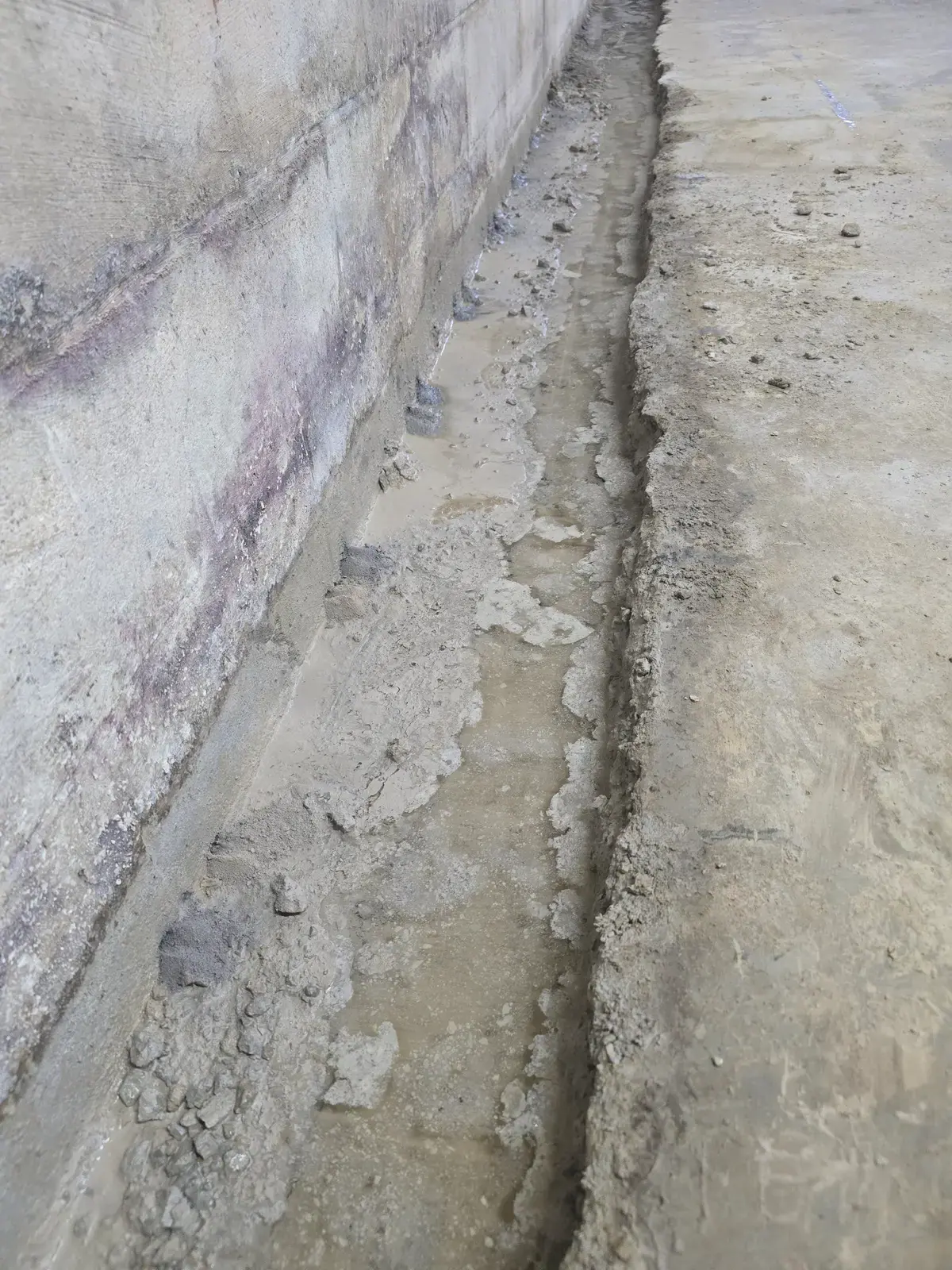
Both use the same idea, pipe in stone, at different points on the water's way in.
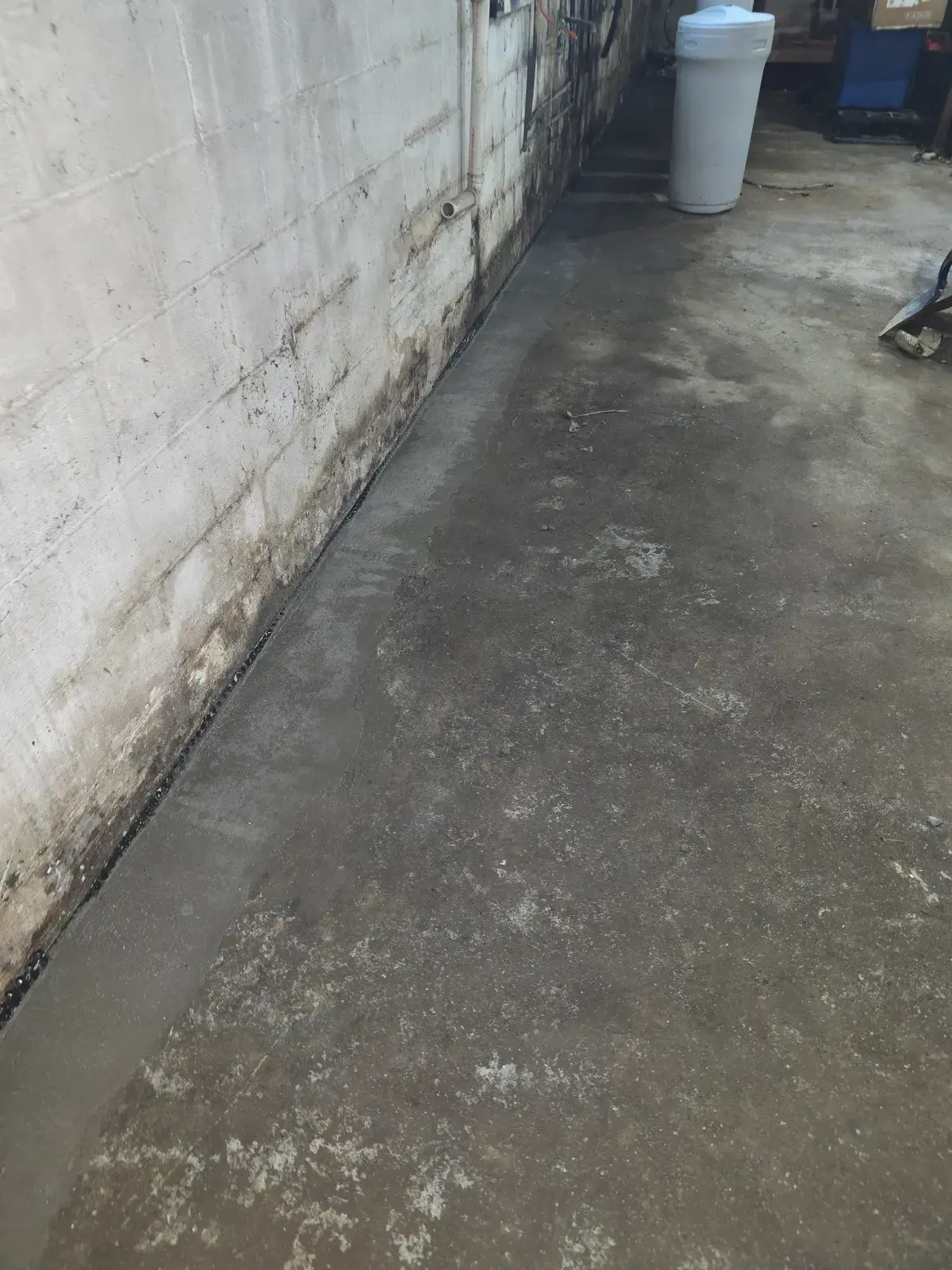
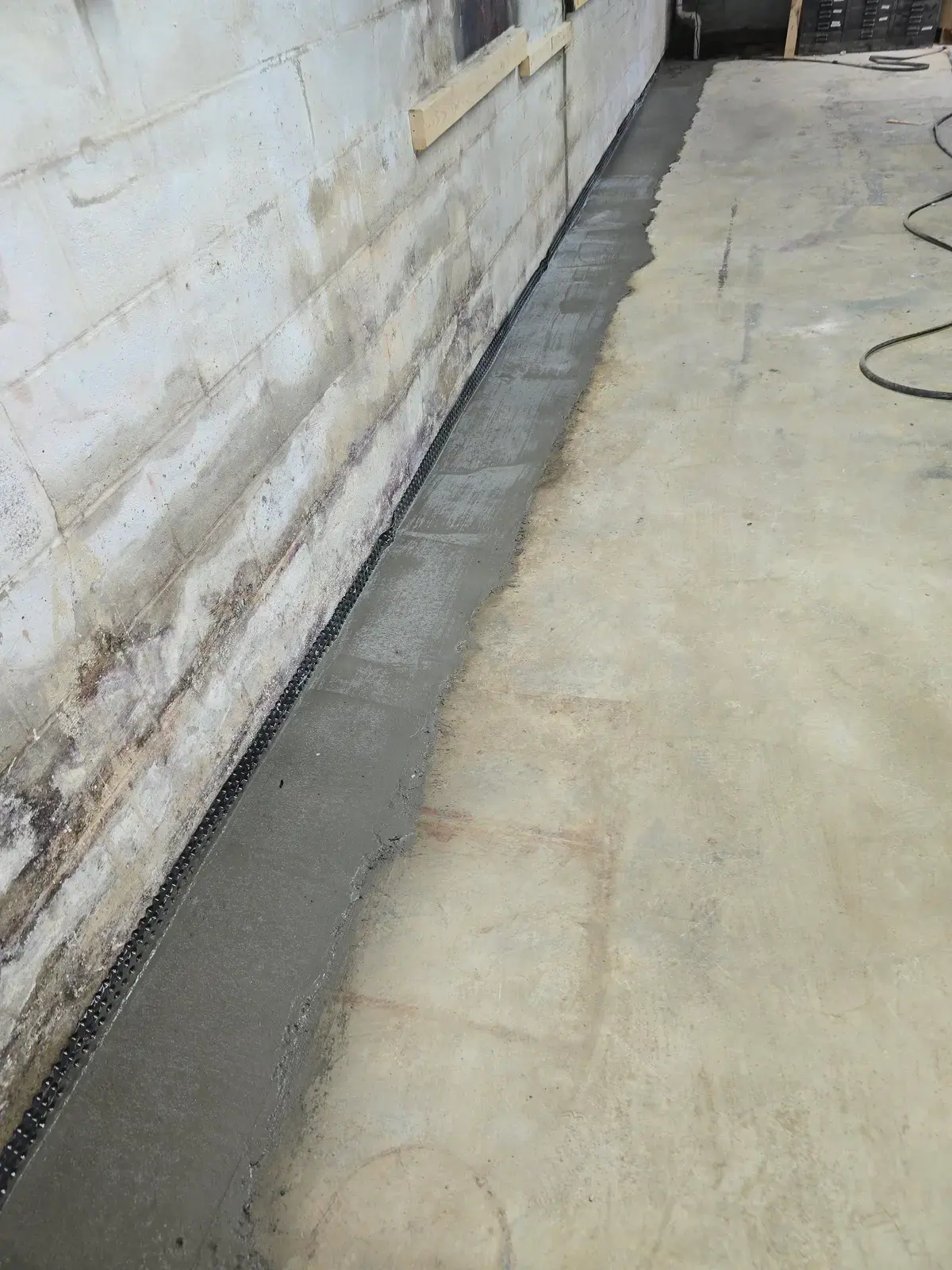
An interior French drain, also called an interior perimeter drain, runs inside the basement along the base of the walls, beside the footing and under the edge of the floor. It catches water that has already reached the foundation, whether it comes through the wall, at the joint between wall and floor or up from under the slab, and carries it to a sump pit. From there a pump lifts it out of the house.
An exterior French drain works outside. Laid deep beside the footing, it drains the wet soil against the wall before the water builds pressure. Laid shallower around the house or across the yard, it intercepts water running toward the foundation from higher ground and carries it off to a lower spot.
- Interior fits when water comes in along the floor on several walls, when the walls are hollow block, when a porch, driveway or addition sits against the foundation, or when digging outside would tear up finished landscaping.
- Exterior fits when water comes off a hillside or a neighbor's yard, when the outside of the wall also needs sealing, or when you'd rather not open the basement floor.
- Both fit some houses: an exterior drain to take the pressure off and an interior one to catch what still gets through.
How an Interior Perimeter Drain Is Installed
The work happens in a set order, and most of it is digging and concrete:
- Clear the walls. Stored things come away from the walls, and the floor is protected where we work.
- Open the floor. A narrow strip of concrete is cut and broken out along each wall that needs the drain.
- Dig to the footing. The trench goes down beside the footing, so the pipe sits at or below the top of it.
- Lay the pipe in stone. Perforated pipe goes in on a bed of washed stone and is covered with more, sloped so the water runs toward the pit.
- Drain the block. In a hollow block wall, small holes in the bottom course let trapped water out of the cores and into the drain.
- Set the pit and pump. The pipe ends in a lidded sump pit, and the pump's discharge line runs outside. Our sump pump installation page covers that part.
- Close the floor. New concrete goes back over the trench, level with the old floor.
Depth is the detail that matters most. A drain laid above the top of the footing leaves water standing against the bottom of the wall, and the bottom course of a block wall is where it leaks first.
Exterior French Drains Around the House
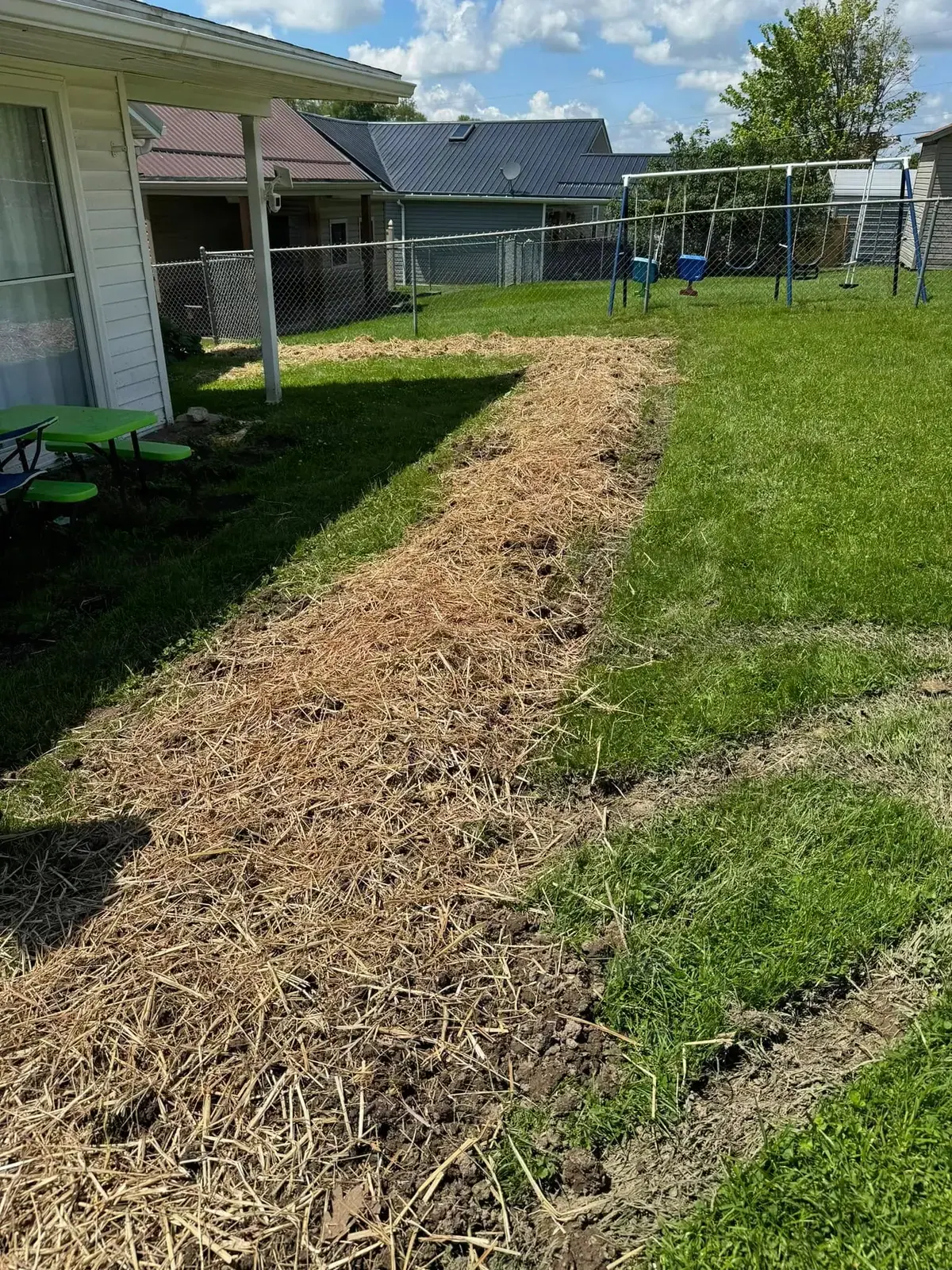
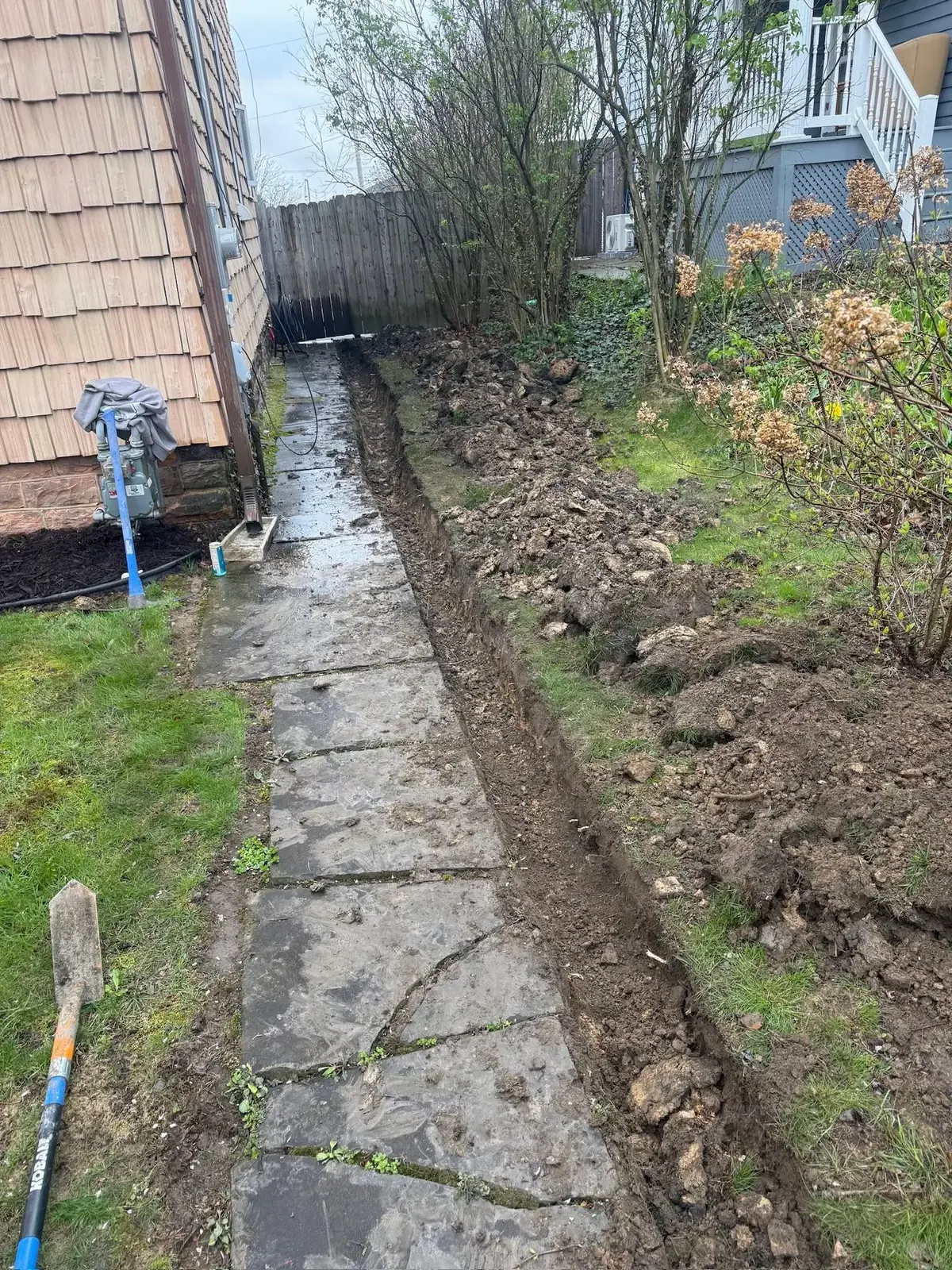
Outside, the trench follows the foundation or the path the water takes across the yard. It is lined with filter fabric so the soil doesn't wash into the stone, filled with washed stone around a perforated pipe, and run at a steady fall to an outlet where the water can let out on lower ground. Around a house the trench goes down to the footing; across a yard it can be shallower.
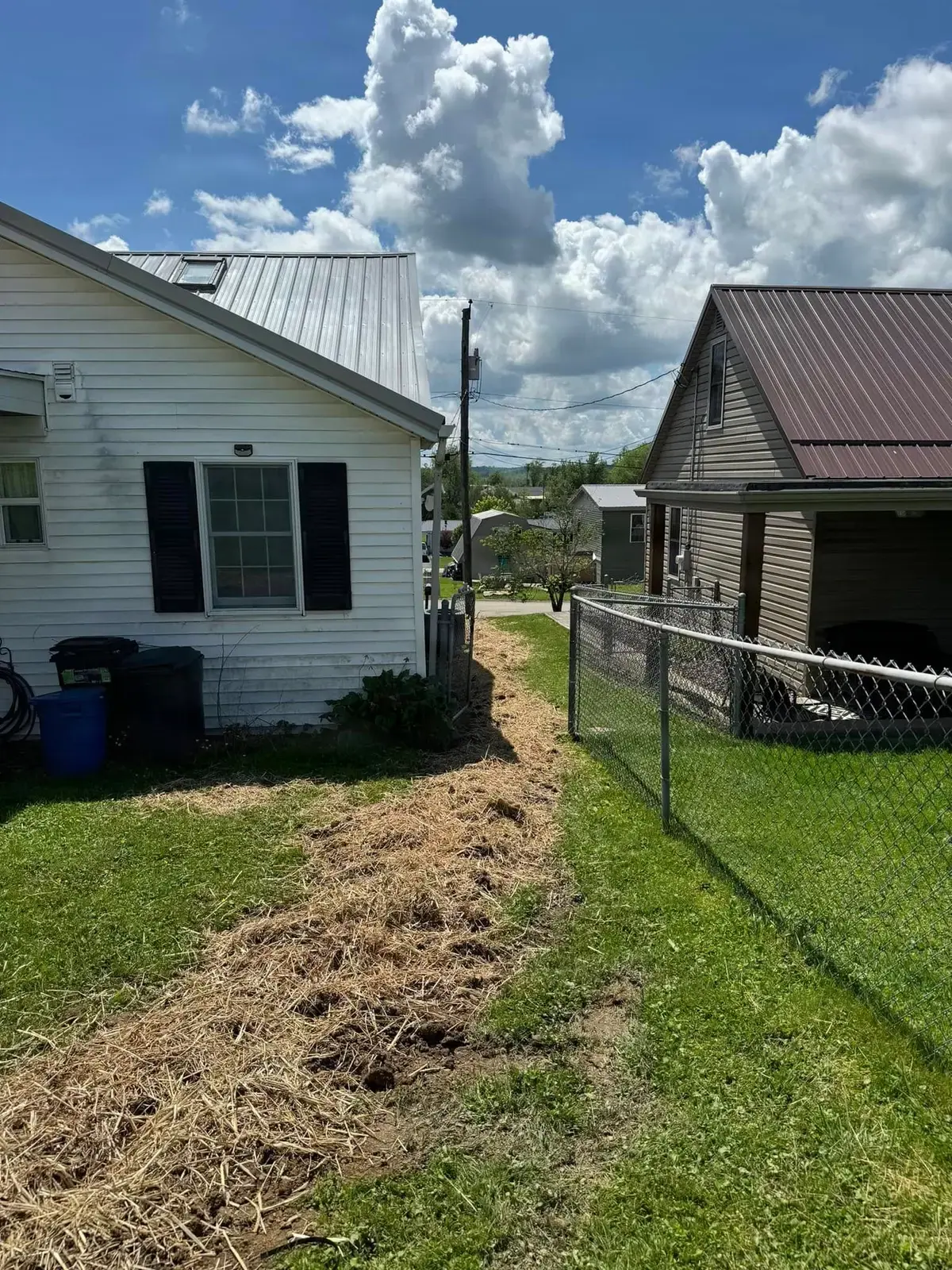
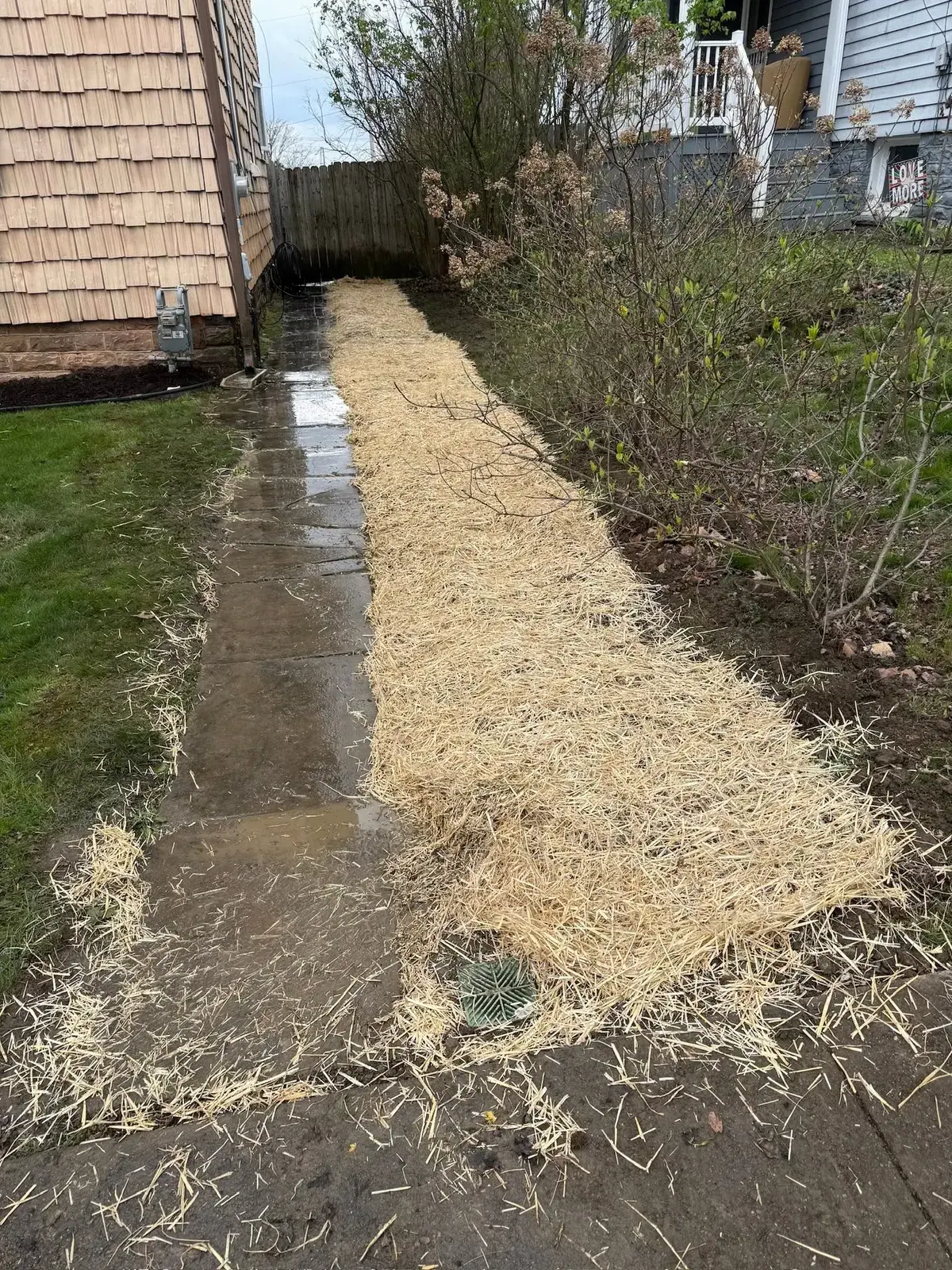
A dig like this leaves its mark for a while. Backfilled soil settles over the weeks after the job, especially through the first few rains, and the trench line sinks a little below the lawn around it. The job isn't finished until those spots are brought level again. One Google review, written after drains were put in around a house with a flooding basement, says it in a homeowner's words:
“He even applied mold spray to a shed that was leaking and is coming back to smooth out the places they needed to dig for the drains now that they’ve settled. This is a great company and I would highly recommend them.”
Sarah C., Google review
Standing water in the yard and roof water from the gutters often come with a wet basement, and they have their own fixes: gutter lines, underground downspout extensions and regrading. Those are on our yard drainage and gutter lines page.
Freeze, Thaw and Wet Ground in Fayette County
In March 2026 we wrote that the weather couldn't make up its mind: snow, rain, then melting the next day, and all that freezing and thawing puts a lot of stress on gutters, drainage and foundations. The records agree. NOAA's 1991-2020 normals for the Uniontown 1 NE station count 128.9 days a year with a low at or below 32°F, but only 25.6 days that stay below freezing. That leaves about 103 days a year when the ground freezes at night and thaws by afternoon.
Frozen topsoil sheds meltwater instead of soaking it up, so the water runs to the loosest ground on the lot, the backfill against the foundation. The soil underneath is often wet already: NRCS lists ground water near the surface, its "depth to saturated zone", as a limitation for basements on 49.1% of Fayette County's soil acres. Spring adds 11.9 inches of rain between March and May. A drain set at the footing gives that water a way out before it rises against the wall.
Cold weather matters at the outlet too. An exterior drain has to let out where its end won't freeze shut or get buried in snow, or the whole line backs up with nowhere to go.
What Pennsylvania's Code Says About Foundation Drains
Pennsylvania's building code, the 2021 International Residential Code since January 1, 2026, sets the rule in section R405.1: "Drains shall be provided around concrete or masonry foundations that retain earth and enclose habitable or usable spaces located below grade." It goes on to say the pipe or stone "shall be installed at or below the top of the footing or below the bottom of the slab", the same depth an interior perimeter drain is laid at.
The code's one exception is a foundation on well-drained ground or on the sand-gravel soils its Table R405.1 calls Group I. The largest soil map units in Fayette County's survey are loams and silt loams instead, among them Macove-Gilpin and Gilpin-Weikert channery silt loams, Buchanan loam and Guernsey silt loam. And most of the county's older basements were built long before the rule, with no footing drain at all or with old clay tile that silt and roots have closed up over the years.
We believe in honest work and doing the job right the first time, so a drain plan always includes where its water goes. A French drain is often one part of basement waterproofing, next to crack sealing and gutter work. If water has sat in the basement long enough to leave musty smells or mold spots, mold removal comes after the drain is in. We install French drains across Fayette County, Connellsville included, and the estimate is free: call (724) 912-8151.
Is Water Getting In Along the Floor?
Call (724) 912-8151 for a free estimate.
Photos From Our Jobs
Every photo here is from one of our own jobs. Tap one to see it bigger.

Questions We Hear a Lot

-
It depends on where the water comes in. An interior drain catches water at the footing inside the basement and sends it to a sump pump, without digging up the yard. An exterior drain stops water before it reaches the wall, or carries it off a wet yard. Some houses need both.
-
Almost always. A basement floor sits below the yard around it, so the water the drain collects has to be lifted out. The drain runs to a sump pit, and the pump sends the water out through a discharge line, away from the foundation. A hillside lot with lower ground nearby can sometimes drain by gravity instead.
-
Yes, along the trench line. The soil goes back in once the pipe and stone are laid, and it settles over the next weeks and rains. Expect the trench line to sink a little at first; it gets smoothed out once it has settled.
-
A drain laid deep beside the footing sits below the frost. The outlet is the part to watch: it has to stay clear of ice, snow and soil, or water backs up the line. With about 103 days a year that freeze and thaw at the Uniontown station, the outlet is placed with winter in mind.
-
Yes. Inspections and estimates are free. Call (724) 912-8151 or use the contact form, and we'll come look at the problem and tell you what we'd do.
-
We're based in Hopwood, PA, and serve Fayette County and the surrounding areas of Southwestern Pennsylvania, including Uniontown, Connellsville and Mount Pleasant. Call (724) 912-8151 to check your location.
-
- Service Area Fayette County, PA &
surrounding areas - Working Hours Open 24 hours7 days a week
-


