 Call: (724) 912-8151


-
Family-Owned
Locally and family-owned in Hopwood, serving Fayette County and surrounding areas.
-
Free Estimates
Licensed & insured, PA203391. Call (724) 912-8151 for a free estimate.
 Family-Owned
 Free Estimates
Basement Waterproofing
Water in a basement is a symptom. Something outside the wall, under the floor or at the edge of the roof is sending it there, and the right fix depends on which one it is. KAE Solutions waterproofs basements across Fayette County and Southwestern Pennsylvania from our base in Hopwood: interior and exterior waterproofing, crack sealing, French drains, sump pumps and the gutter lines that feed them. Our own line for it is "Keep Water Out. Keep Strength In." We're locally and family-owned, we work on homes and commercial buildings, and the inspection is free. Call (724) 912-8151.
Why Basements in Fayette County Take On Water
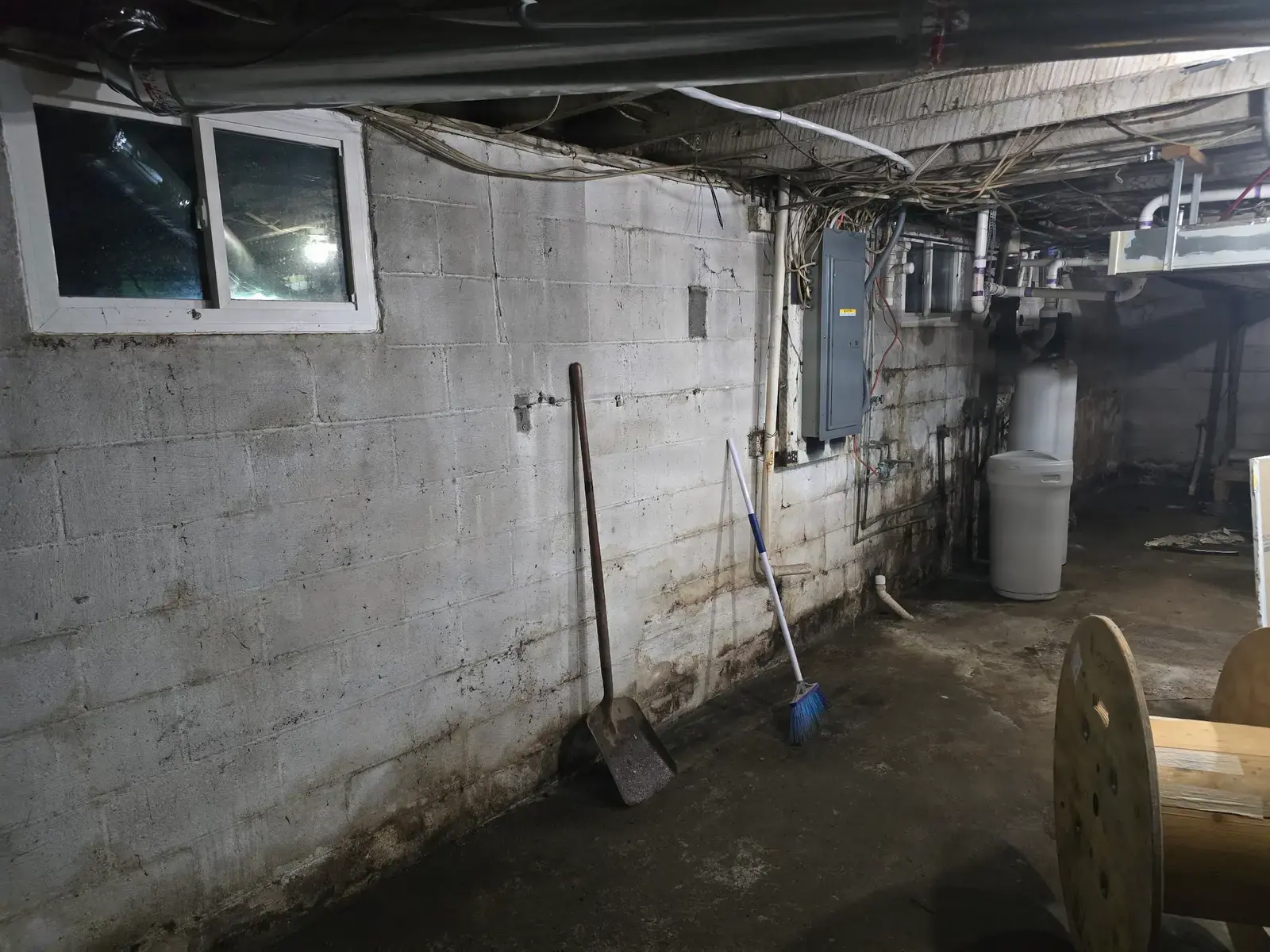
Start with the ground. The USDA's soil survey for Fayette County rates 88.6% of the county's soil acres "Very limited" for dwellings with basements, the most restrictive of its three ratings. On 42.6% of acres the water table rises to within 2 feet of the surface at some point in the year, and a basement floor sits well below that. When the soil around a foundation fills with water, it presses on the walls and pushes up under the slab. That push is hydrostatic pressure, and it finds every crack, cold joint and open mortar joint the wall has.
Then add the weather. NOAA's 1991-2020 normals for the Uniontown 1 NE station put precipitation at 44.35 inches a year, almost five inches more than Pittsburgh's airport gets (39.61). Spring alone brings 11.9 inches, and it lands on ground still holding the melt from 28.1 inches of snow.
And the houses are old. The median home in Uniontown and in Connellsville was built in 1942, and more than half of the homes in each city went up before 1950. Foundations of that age are usually block, stone or brick, often with no more than a coat of tar outside, under basements that were never meant to be living space. Block walls are hollow, so water collects in the cores and weeps out at the bottom course. Stone walls let it through wherever the mortar has washed out.
Find the Source Before Anything Else
Your basement doesn't have to flood for it to have a water problem. A little water after a heavy rain is not normal: it is a sign that something isn't working the way it should, and drying it up doesn't fix why it got there. The signs to watch for:
- Musty smells that come back after you air the basement out.
- Damp walls or floors, or a dark line where the wall meets the floor.
- Cracks in the foundation or the basement floor.
- Wall stains, peeling paint or white, chalky deposits on block.
- Mold spots on wood, drywall or stored boxes.
- A sump pump that isn't working, or high humidity you can feel.
The inspection is where the fix gets decided. We look at where the water shows and when: after a long soaking rain or a short hard one, in the spring thaw or all year. We check the wall, the cold joint at the floor, the grade outside and each downspout. Water at one corner under a downspout is a different job from water seeping along every wall. We'll identify the source and recommend a lasting solution, not a temporary patch.
“If you have basement water issues contact Anthony at KAE solutions!”
Dylan T., Google review
Interior vs Exterior Basement Waterproofing
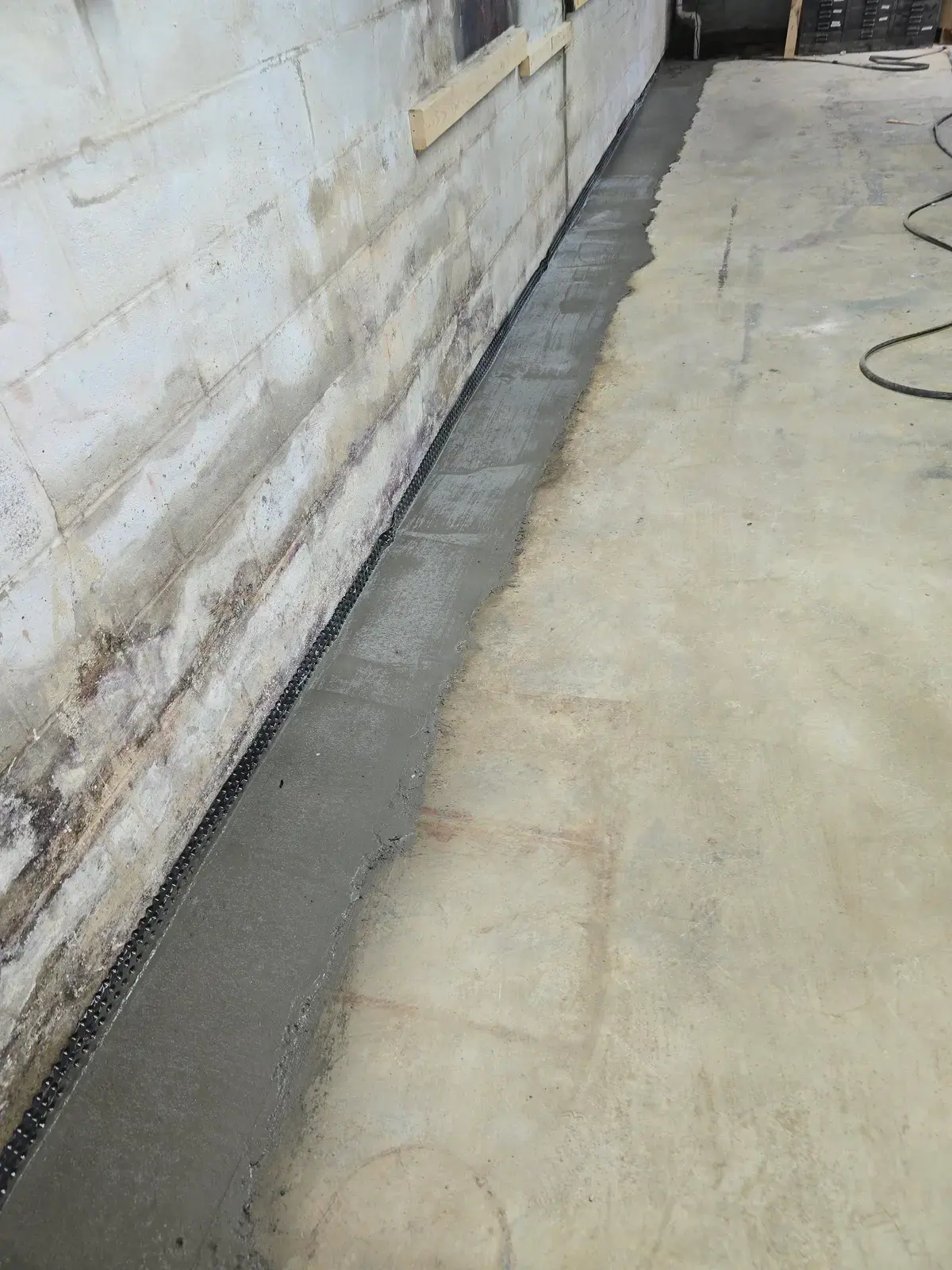
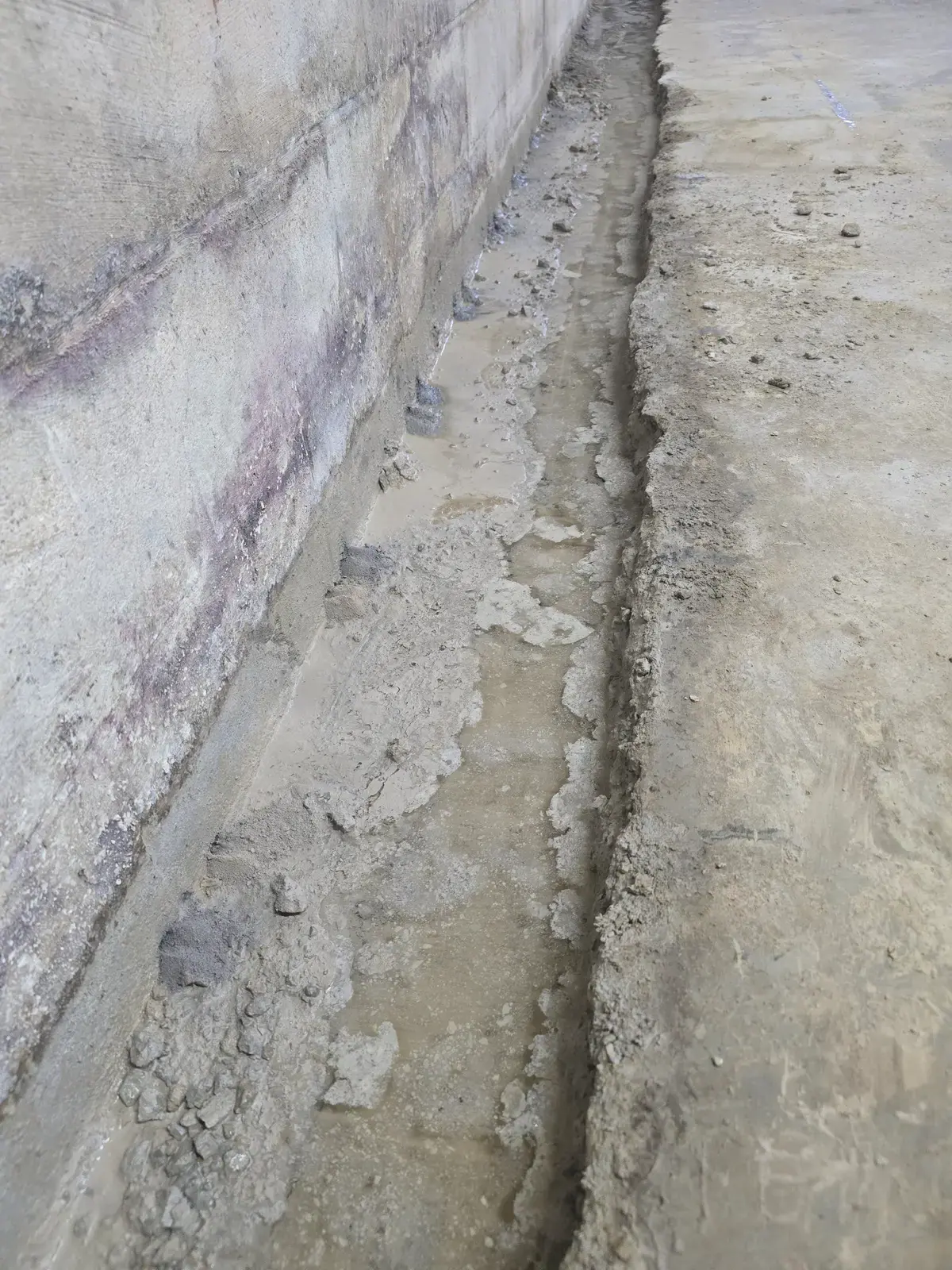
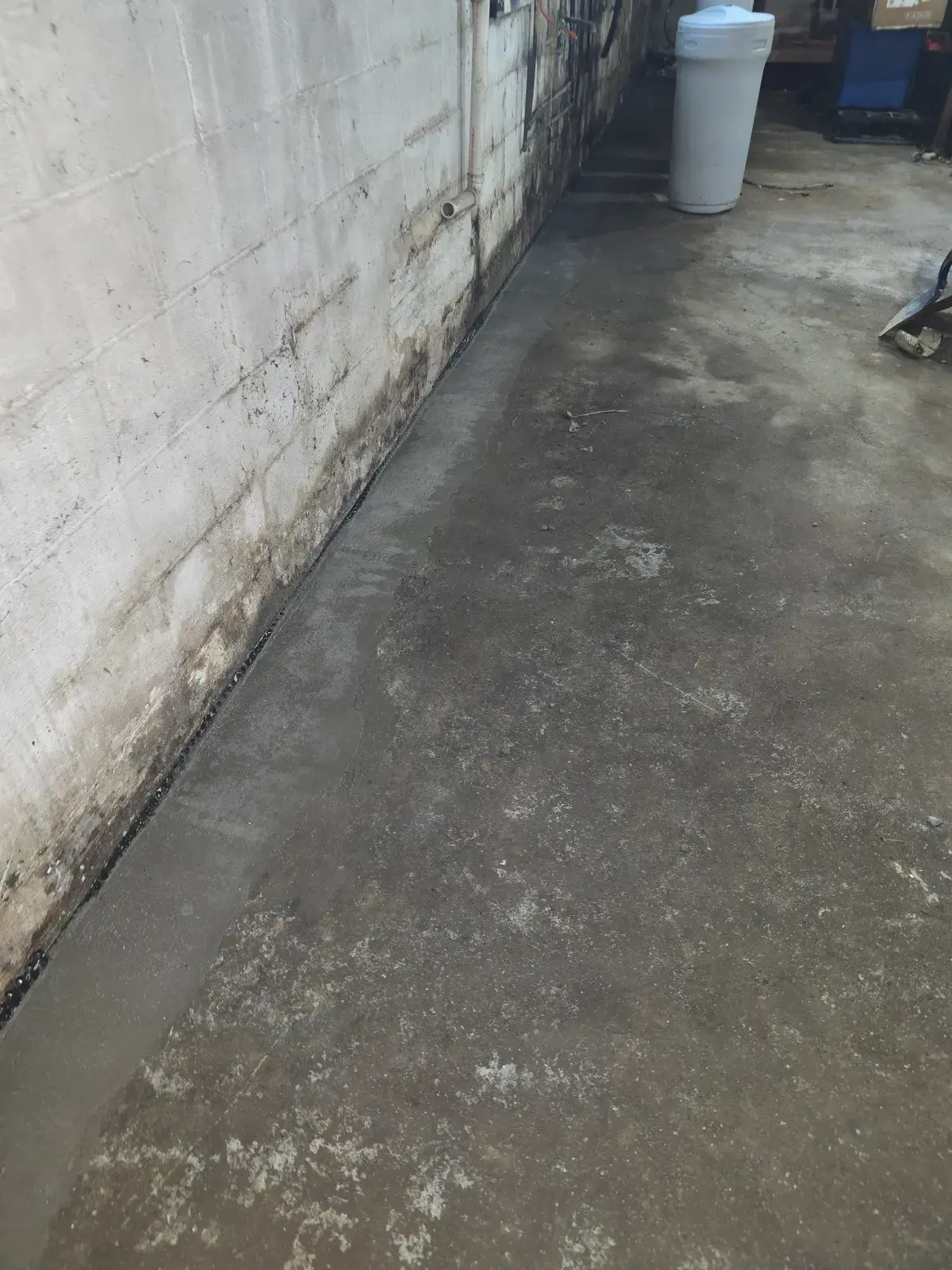
Interior waterproofing handles water once it reaches the foundation. A strip of floor is opened along the walls, a perforated pipe is set in stone beside the footing, and the floor is closed back over it. Water that comes through the wall or up at the joint drops into the drain and runs to a sump pit, where a pump sends it outside. In a block wall, small holes in the bottom course let trapped water out of the cores. The yard stays as it is, and the drain relieves water under the floor as well as along the walls.
Exterior waterproofing stops water at the outside face of the wall. The soil is dug out to the footing, the wall is cleaned and repaired, a waterproof coating or membrane goes on, and a drain at the footing carries water off before it builds up against the wall. It is the bigger dig, but it keeps water out of the wall itself, which matters for a stone or brick foundation or a wall that needs repair from the outside.
Which one fits depends on the house: room to dig, what is built against the foundation, where the water comes in. Some homes need a piece of each. The drains, inside and out, are explained on our French drains page.
“We had our basement completely waterproofed and it turned out great!”
Tyler B., Thumbtack review
Cracks, Cold Joints and Floor Leaks
Not every wet basement needs a full drain system. The places we keep finding leaks are foundation wall cracks, cold joints in concrete and basement floor cracks, and a single crack in a poured wall can often be sealed on its own. A crack that lets water in but hasn't moved gets sealed so the water can't follow it through. A crack that is wider at one end, runs sideways along a block wall or comes with a wall leaning inward is a sign of movement, and sealing it alone won't hold. Our foundation crack repair page goes through which is which.
Fayette County sits on the Pittsburgh coal seam, and about 31.7% of the county lies in what PA DEP maps as an "Underground Mining Area", over old mines. If a crack opens suddenly in a house over mined ground, call DEP's mine subsidence program first. We repair cracks and walls; we don't diagnose mine subsidence.
Sump Pumps, Gutters and Roof Water
An interior drain ends at a sump pit, and the pump has to start every time the water rises. A pump that is too small, a stuck float switch or a discharge line frozen in January can undo a good drain in one storm. Our sump pump page covers installation, replacement and where the water should go.
Roof water is the easiest water to keep away from a basement, and the most often ignored. A downspout that empties at the corner of the house puts the water from its whole stretch of roof into the loosest soil on the lot, the backfill against the foundation. Running gutter lines underground or extending the downspouts is often part of a waterproofing job; see yard drainage and gutter lines. If water has already soaked drywall, carpet or stored wood, mold removal comes after the source is fixed.
What Pennsylvania's Building Code Asks of a Basement
Since January 1, 2026, Pennsylvania's Uniform Construction Code uses the 2021 International Residential Code. Section R405.1: "Drains shall be provided around concrete or masonry foundations that retain earth and enclose habitable or usable spaces located below grade." Section R406.2: "In areas where a high water table or other severe soil-water conditions are known to exist, exterior foundation walls ... shall be waterproofed". Whether a lot counts is the local code official's call, but the soil survey numbers above show how common wet ground is here.
The code is written for new foundations, and most basements around here were dug long before it, usually without a working footing drain. Waterproofing an old basement means adding what the house was built without: a drain at the footing, a pump to lift the water out, a sealed wall and ground that slopes away. Seal it before you feel it. Call (724) 912-8151 for a free inspection, from next door in Uniontown to the far side of Fayette County.
Water in Your Basement After Rain?
Call (724) 912-8151 for a free estimate.
Photos From Our Jobs
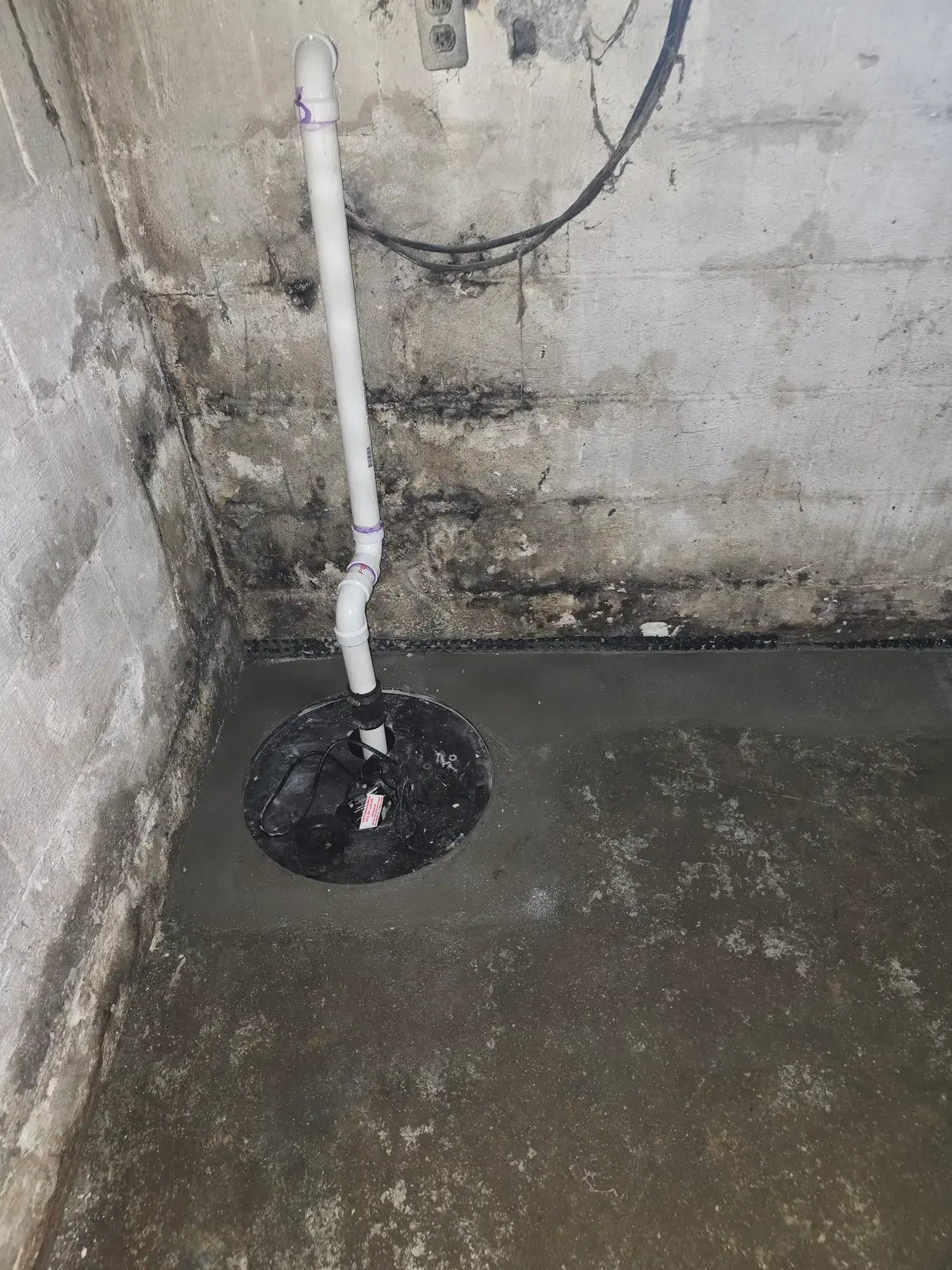
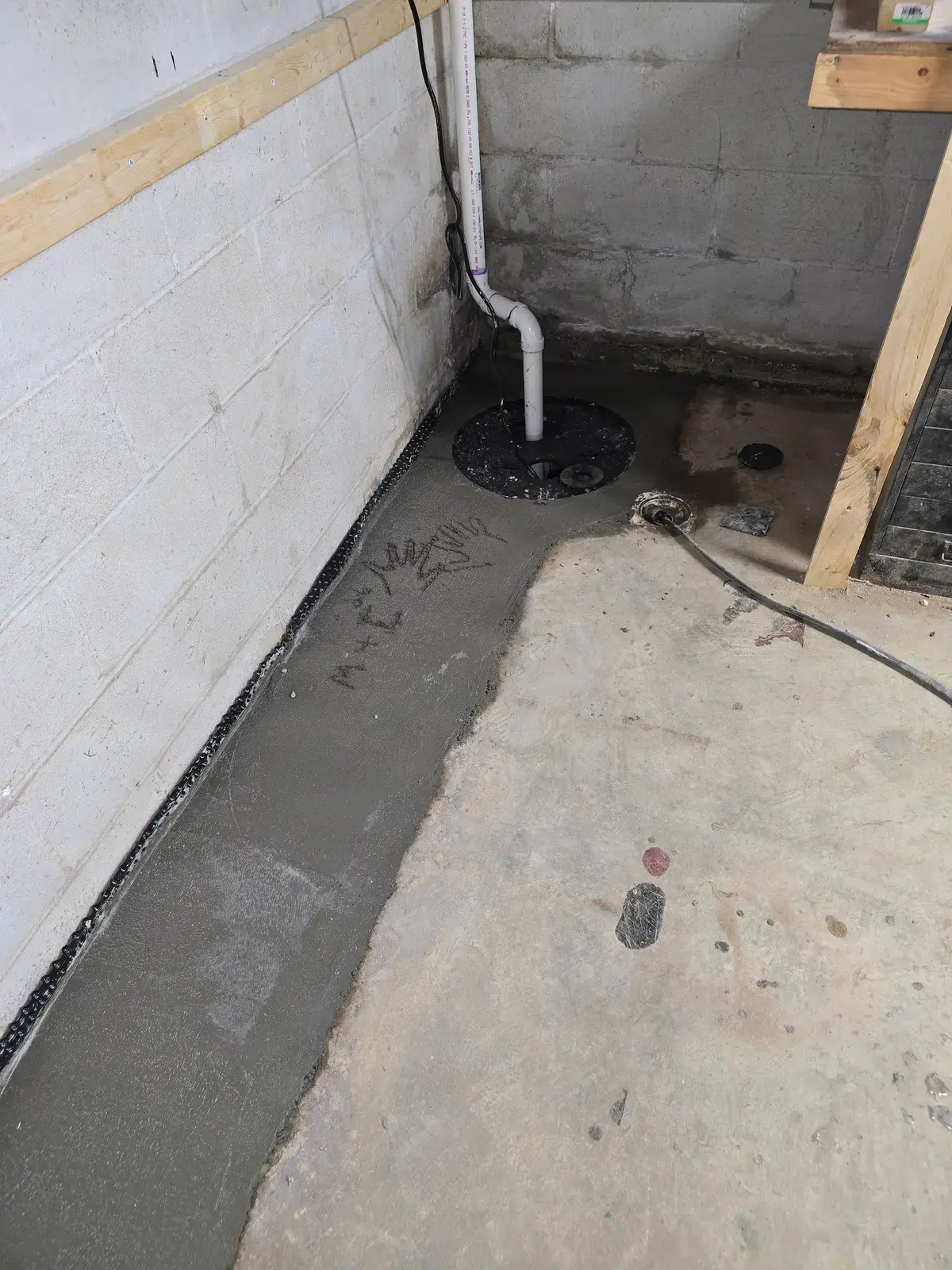
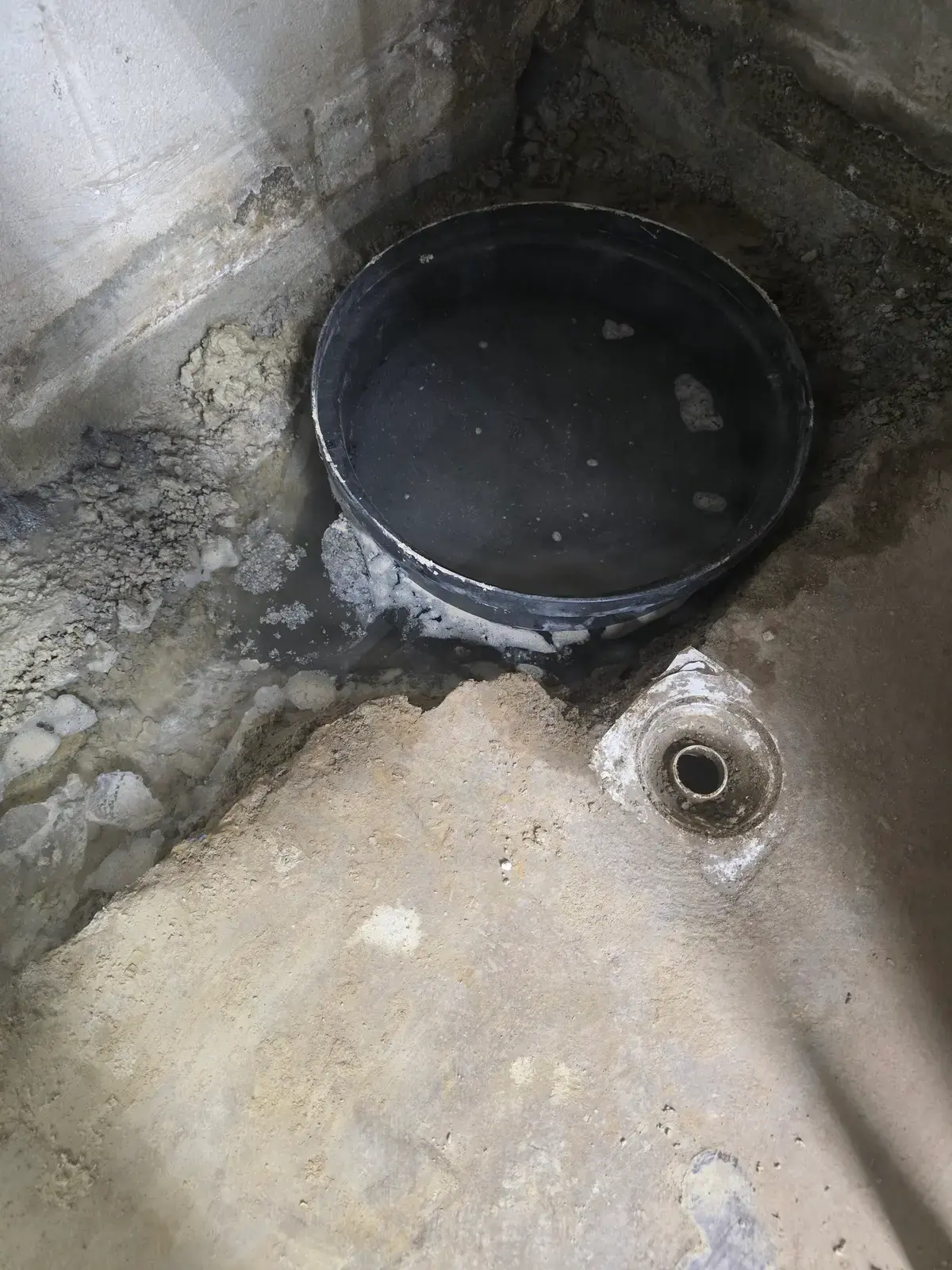
Every photo here is from one of our own jobs. Tap one to see it bigger.
Questions We Hear a Lot

-
No. It's common in older Fayette County basements, but water getting in means something isn't working: a crack, a cold joint, a missing or failed footing drain, or roof water dumped beside the wall. Drying it up doesn't fix the cause. We find where it comes in and why.
-
A basement waterproofing company, unless the water is coming from a pipe, which is a plumber's job. We look at the walls, the joint along the floor, the grade and the downspouts, and tell you where the water comes from. Call (724) 912-8151.
-
Neither in general. An interior system collects water at the footing and pumps it out without digging up the yard, and it relieves water under the floor too. Exterior waterproofing keeps water out of the wall itself but means excavating down to the footing. The house, the lot and where the water comes in decide it.
-
The length of wall that needs a drain, interior or exterior work, how many sump pits, the wall type and its cracks, what has to be dug around or moved, and where the water can be discharged. That's why we look before we price anything.
-
Yes. A crack that leaks but hasn't moved can be sealed on its own. A horizontal crack, a stair-step crack in block or a wall leaning inward points to movement, and that is foundation repair. If a crack appears suddenly over mined ground, contact PA DEP's mine subsidence program first.
-
Yes. Inspections and estimates are free. Call (724) 912-8151 or use the contact form, and we'll come look at the problem and tell you what we'd do.
-
We're based in Hopwood, PA, and serve Fayette County and the surrounding areas of Southwestern Pennsylvania, including Uniontown, Connellsville and Mount Pleasant. Call (724) 912-8151 to check your location.
-
- Service Area Fayette County, PA &
surrounding areas - Working Hours Open 24 hours7 days a week
-


