 Call: (724) 912-8151


-
Family-Owned
Locally and family-owned in Hopwood, serving Fayette County and surrounding areas.
-
Free Estimates
Licensed & insured, PA203391. Call (724) 912-8151 for a free estimate.
 Family-Owned
 Free Estimates
Crawl Space Encapsulation
Under many houses in Fayette County, the crawl space is bare soil with a few feet of dark air above it, and that soil is often wet. Crawl space encapsulation closes the space off from it. We seal out ground moisture, install a heavy-duty vapor barrier over the floor and up the walls, close the vents and openings that let outside air in, upgrade the insulation and put moisture control in place. KAE Solutions does this work from Hopwood for homes across Fayette County and Southwestern Pennsylvania. Seal it before you feel it. The inspection and the estimate are free: call (724) 912-8151.
Crawl Space Encapsulation in Fayette County, PA
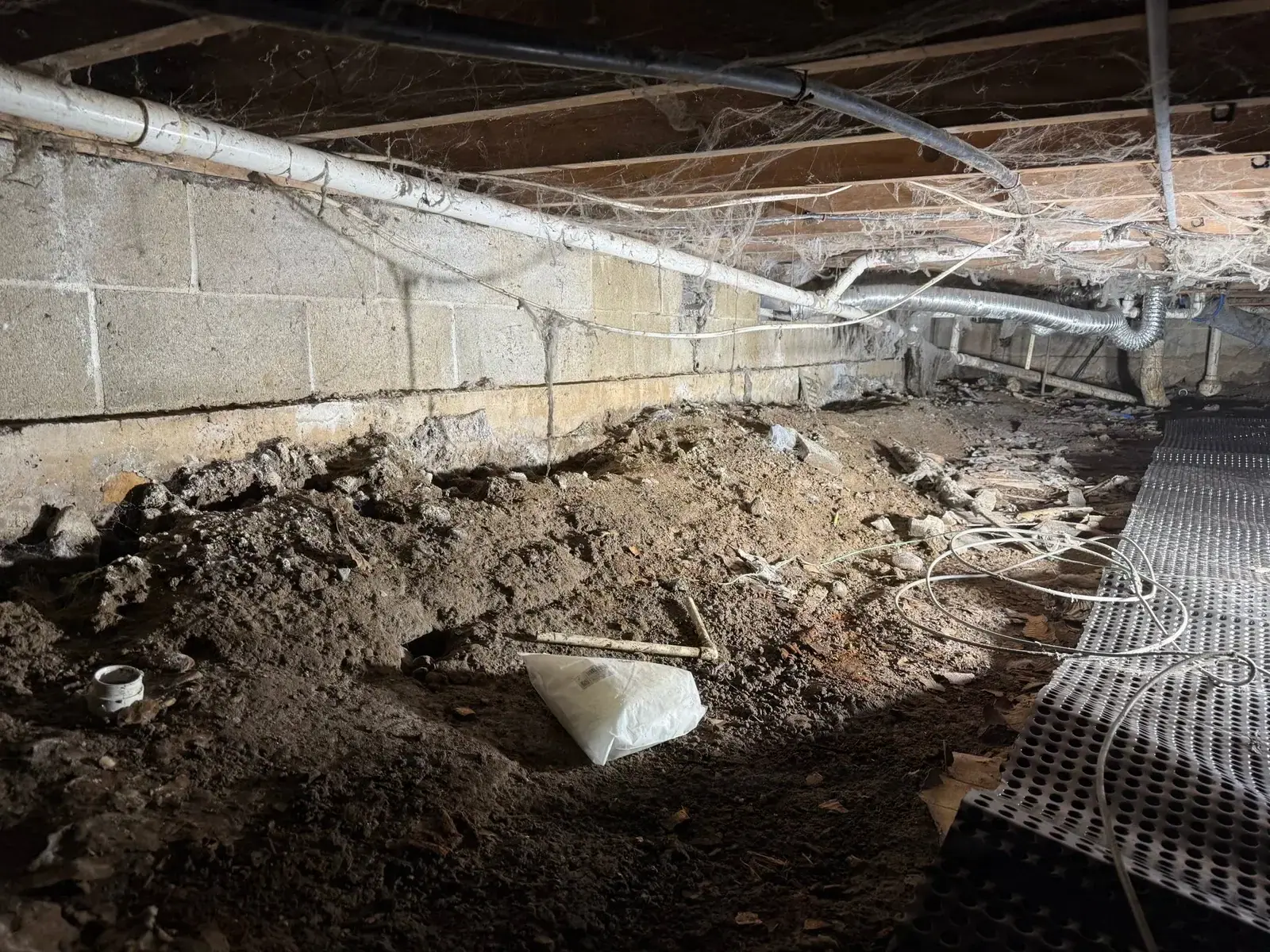
The ground here holds water close to the surface. In the USDA soil survey for Fayette County, the water table rises to within 2 feet of the surface at some point in the year on 42.6% of the county's acres. A crawl space floor often sits close to the outside grade, so for part of the year it sits in or just above wet soil. Moisture rises out of that dirt as vapor every day, whether you ever see water or not, and it ends up in the joists, the subfloor and the insulation.
Winter adds to it. NOAA's 1991-2020 normals for the Uniontown 1 NE station count 28.1 inches of snow a year and 128.9 days with a low at or below 32°F, but only 25.6 days that stay below freezing. That leaves about 103 days a year that freeze and thaw. Each thaw puts melting snow into soil that is often already full. As our January post put it, melting snow and saturated soil can push moisture into unprotected crawlspaces, and that moisture brings mold, wood rot and long-term structural issues with it. The same post made the case for doing the work in the cold months: sealing and insulating the crawl space helps control indoor temperatures, "keeping floors warmer now and reducing energy loss all winter long."
Signs Your Crawl Space Is Too Damp
Most people never go into their crawl space, so it shows its problems through the house above it. Air from a crawl space rises into the rooms over it through gaps around pipes, wires and ducts, which is why a damp one shows up as a smell in the kitchen or a cold floor in the living room. Look for these signs:
- A musty smell that cleaning doesn't get rid of, strongest in the rooms over the crawl space.
- Cold floors in winter over an open, uninsulated crawl space.
- Mold or mildew spots on joists, the subfloor or the rim board at the top of the foundation wall.
- Insulation hanging down between the joists or lying on the ground, heavy with moisture.
- Soft or dark wood, the start of wood rot in joists and sills.
- Standing water or wet soil after a heavy rain or a thaw.
- Torn or missing plastic on the ground, or a sheet that only covers part of it.
Another of our posts from January said it plainly: if your floors feel cold, your house smells musty, or you've seen moisture or mold, your crawlspace is talking to you. Any one of these is worth a look, and the look costs you nothing.
“KAE was quick to respond to my inquiry. Very knowledge in their work & efficient!”
Alexis C., Thumbtack review
Crawl Space Encapsulation vs a Vapor Barrier
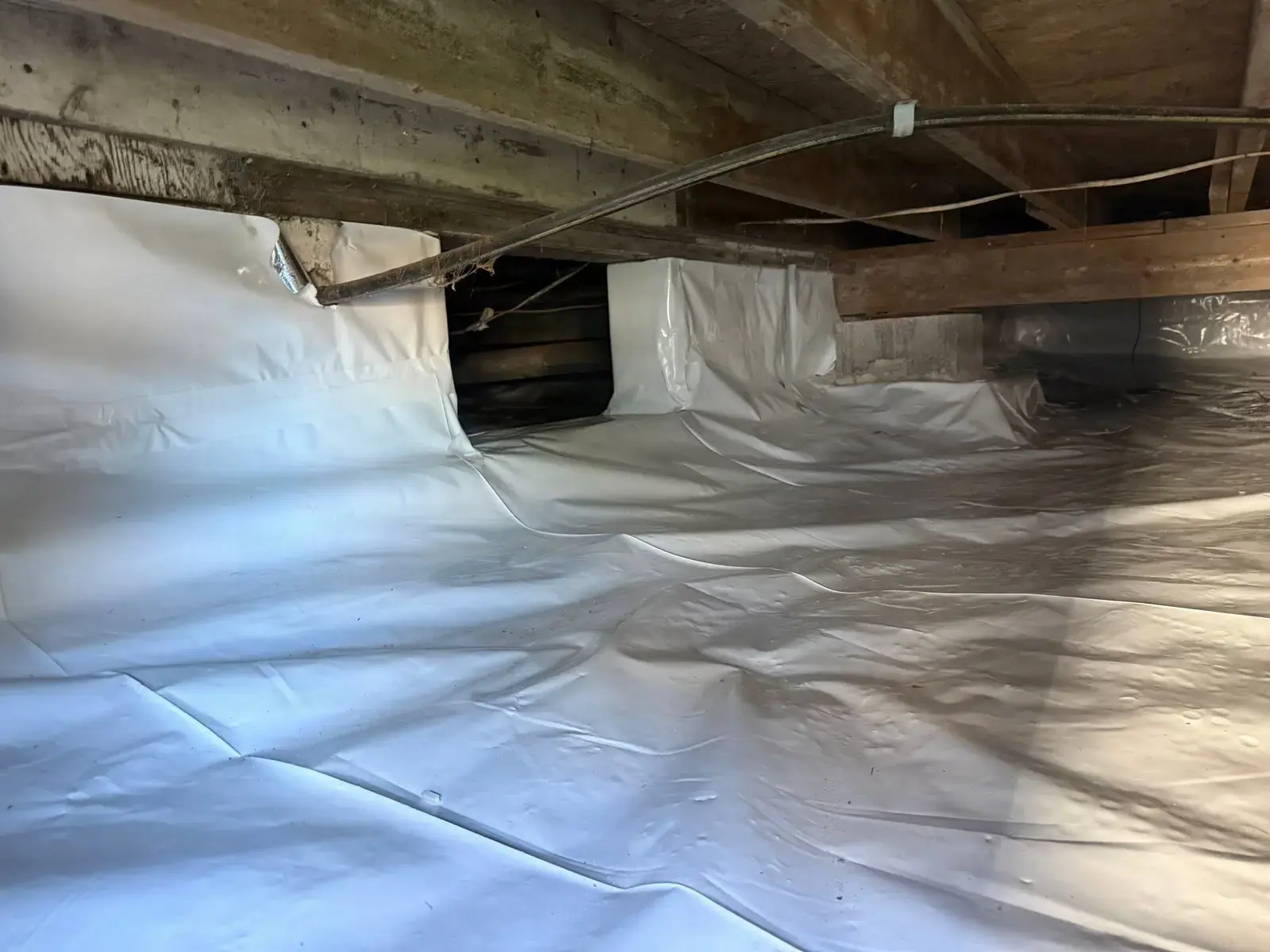
The two get mixed up because both start with plastic on the ground. A vapor barrier on its own is a sheet laid over the soil. It slows the moisture coming up from the dirt, and in a vented crawl space it is often all there is. The vents stay open, so humid summer air still flows in, meets the cooler soil, pipes and wood under the house, and leaves its water there as condensation. Old sheets also tear, shift and pull back from the walls, leaving bare dirt at the edges.
Encapsulation treats the crawl space as a closed room. The vapor barrier covers the whole floor, runs up the foundation walls and around the piers, and every seam is overlapped and sealed. The vents and other openings to the outside are closed. Insulation goes on, and the humidity is kept in check, because a closed space with no moisture control can still turn damp. A plain vapor barrier is the smaller job, and in a dry crawl space with only worn plastic it can be enough. Where the space stays damp, smells or grows mold, full encapsulation is the job that changes it. We tell you which one your crawl space needs, and why.
How We Encapsulate a Crawl Space, Step by Step
Our crawlspace remediation work covers moisture control, mold and mildew removal, vapor barrier installation and insulation upgrades. On a typical encapsulation the steps run in this order:
- Inspect. We look at the soil, the old plastic, the insulation, the wood and where water comes in, and we show you what we find.
- Fix the water first. If water runs into the crawl space, sealing it in is the wrong move. A drain and a sump, gutter lines or regrading come before the liner, and our drainage systems page covers those.
- Clear it out. Torn plastic, debris and wet insulation come out, so nothing damp gets trapped under the new barrier.
- Treat mold and mildew on the wood where it has started. Our mold removal page explains how we do it.
- Seal the openings. Vents and gaps to the outside are closed off.
- Lay the vapor barrier. A heavy-duty liner covers the ground, the seams overlap and are sealed, and it runs up the walls and around the piers.
- Insulate. Insulation upgrades keep the closed space, and the floor above it, warmer through the winter.
- Control the humidity with the kind of moisture control the space needs. The next section explains what the code lists.
Encapsulation keeps moisture out, but it doesn't bring back wood that has already rotted. Sagging floors, soft joists and damaged beams are repair work, and our crawl space repair page covers support beam installation, repair and replacement. That repair usually comes first, before the liner goes down.
What Pennsylvania's Building Code Asks of an Unvented Crawl Space
Pennsylvania's Uniform Construction Code has used the 2021 International Residential Code since January 1, 2026, and it allows both vented and unvented crawl spaces. For an unvented one, section R408.3 starts with the ground: "Exposed earth shall be covered with a continuous Class I vapor retarder. Joints of the vapor retarder shall overlap by 6 inches (152 mm) and shall be sealed or taped." Class I is the tightest class of vapor retarder, a sheet that lets almost no water vapor through. Continuous means no bare patches at the piers or in the corners.
The same section then asks for one way to handle the air in the closed space, from a list of four. One is "Dehumidification sized in accordance with manufacturer's specifications." The others are a small exhaust fan that runs all the time, conditioned air supplied from the house's heating and cooling, or, in an existing house, using the crawl space as part of the air system. Which one fits depends on the house, its furnace and ductwork, and how wet the space runs. We go over that with you before anything is sealed.
Protect your home from the ground up. We encapsulate crawl spaces for homes from Uniontown to Greensburg and across Fayette County, residential and commercial. Call (724) 912-8151 and tell us what you've noticed in the rooms above your crawl space.
Is Your Crawl Space Talking to You?
Call (724) 912-8151 for a free estimate.
Photos From Our Jobs
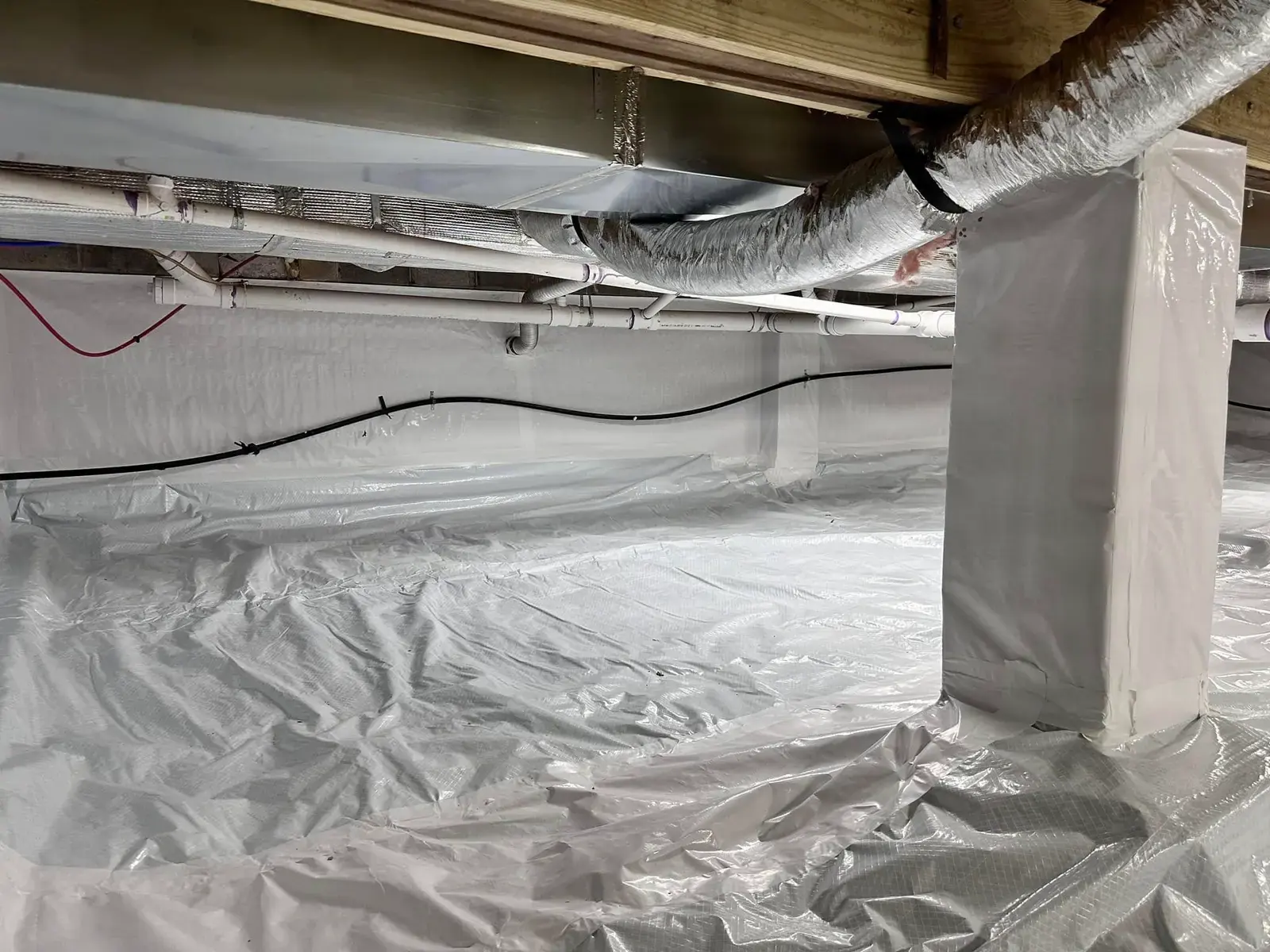
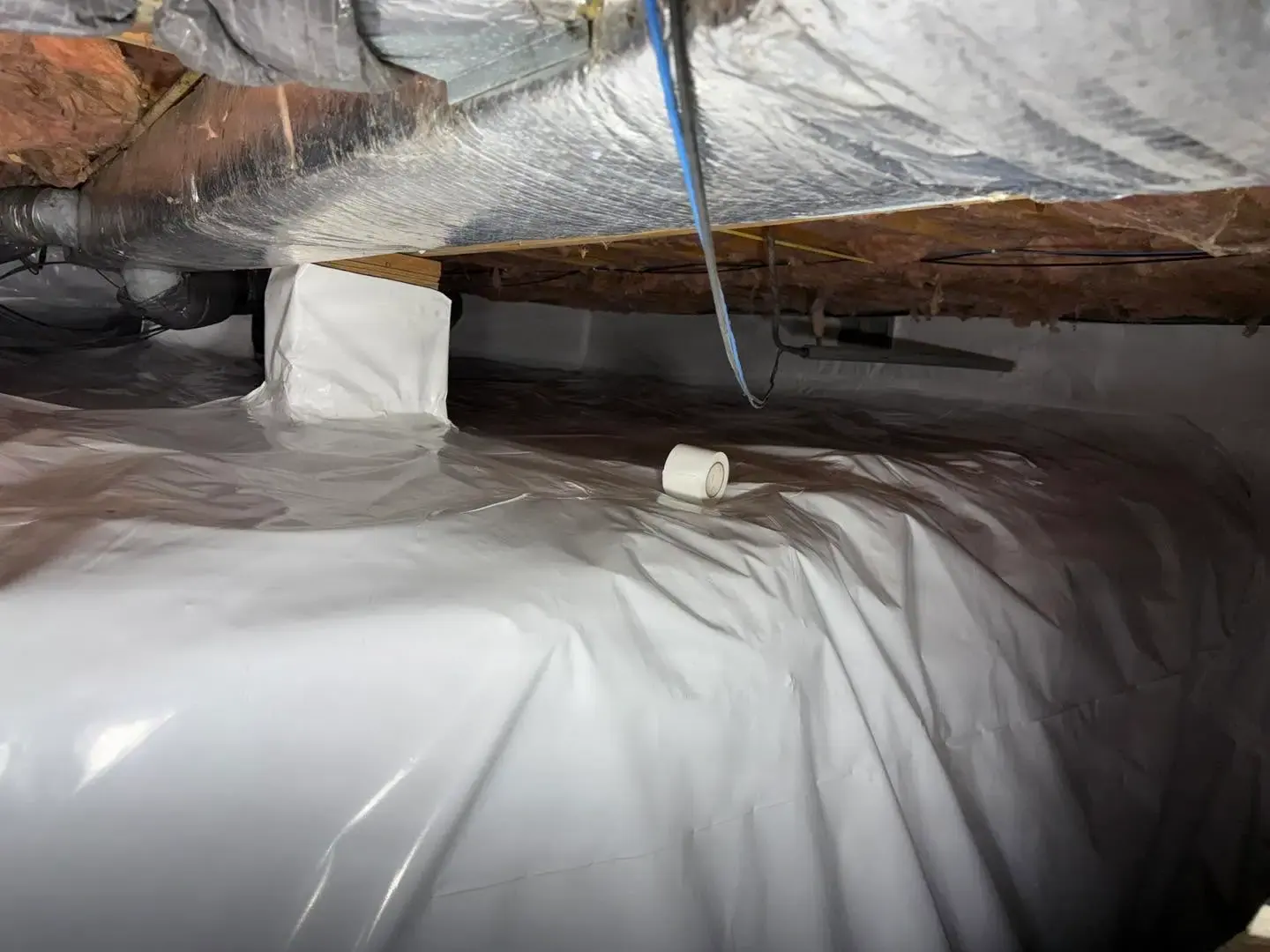
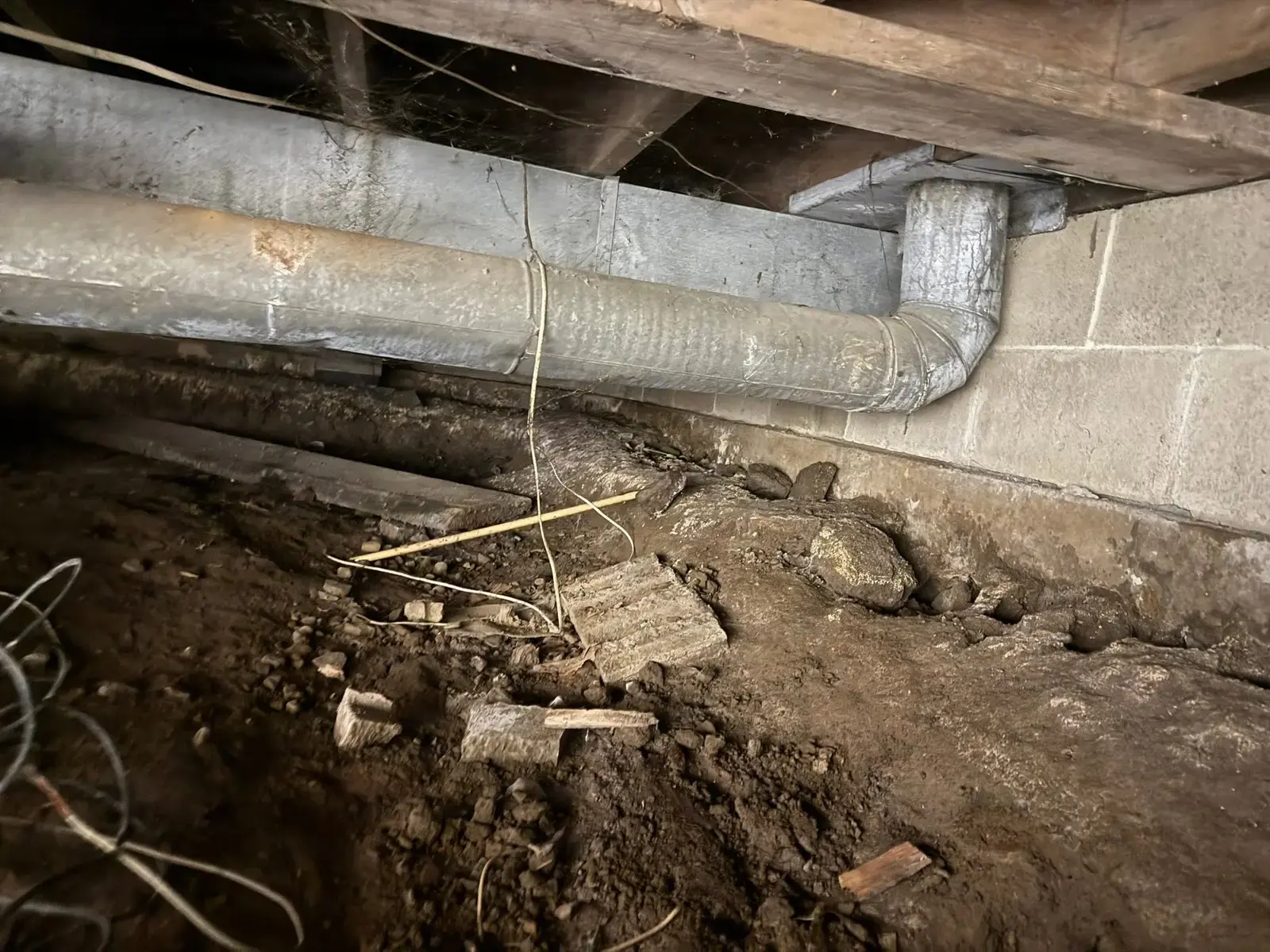
Every photo here is from one of our own jobs. Tap one to see it bigger.


Questions We Hear a Lot

-
A vapor barrier is a sheet over the soil that slows ground moisture, often with the vents left open. Encapsulation seals the whole space: the barrier covers the floor and runs up the walls with sealed seams, the vents are closed, the insulation is upgraded and the humidity is controlled. In a dry crawl space with worn plastic, a new barrier may be all it needs.
-
The pros: ground moisture and humid outside air stay out, the musty smell from below fades, the wood stays drier, and the floors above stay warmer in winter. The cons: it is a bigger job than a plain vapor barrier, a closed crawl space needs moisture control, and it does not fix active leaks or rotted wood, which have to be dealt with first.
-
Pennsylvania's building code doesn't set a thickness. For an unvented crawl space it asks for a continuous Class I vapor retarder with joints overlapped 6 inches and sealed or taped. A mil is a thousandth of an inch, and a thicker liner holds up better where someone crawls over it to reach pipes or storage, while thin plastic tears. We install a heavy-duty vapor barrier and explain the choice at the free inspection.
-
Not until the water is handled. A liner sealed over running water traps it under the house. We fix the water first, with drainage, a sump pump, gutter lines or grading, and then encapsulate.
-
Yes. Inspections and estimates are free. Call (724) 912-8151 or use the contact form, and we'll come look at the problem and tell you what we'd do.
-
Yes. We're fully licensed and insured, and KAE Solutions is a Pennsylvania registered home improvement contractor, PA203391.
-
We're based in Hopwood, PA, and serve Fayette County and the surrounding areas of Southwestern Pennsylvania, including Uniontown, Connellsville and Mount Pleasant. Call (724) 912-8151 to check your location.
-
- Service Area Fayette County, PA &
surrounding areas - Working Hours Open 24 hours7 days a week
-


