 Call: (724) 912-8151


-
Family-Owned
Locally and family-owned in Hopwood, serving Fayette County and surrounding areas.
-
Free Estimates
Licensed & insured, PA203391. Call (724) 912-8151 for a free estimate.
 Family-Owned
 Free Estimates
Foundation Crack Repair
Most basements in Fayette County have a crack somewhere. Some only show that the concrete shrank as it cured. Others let water in every time it rains, and a few are telling you the wall is moving. KAE Solutions repairs foundation wall cracks, cold joints and basement floor cracks for homes across Fayette County and Southwestern Pennsylvania, from our base in Hopwood. We'll identify the source and recommend a lasting solution, not a temporary patch. Inspections and estimates are free: call (724) 912-8151.
Which Foundation Cracks Leak and Which Mean Movement
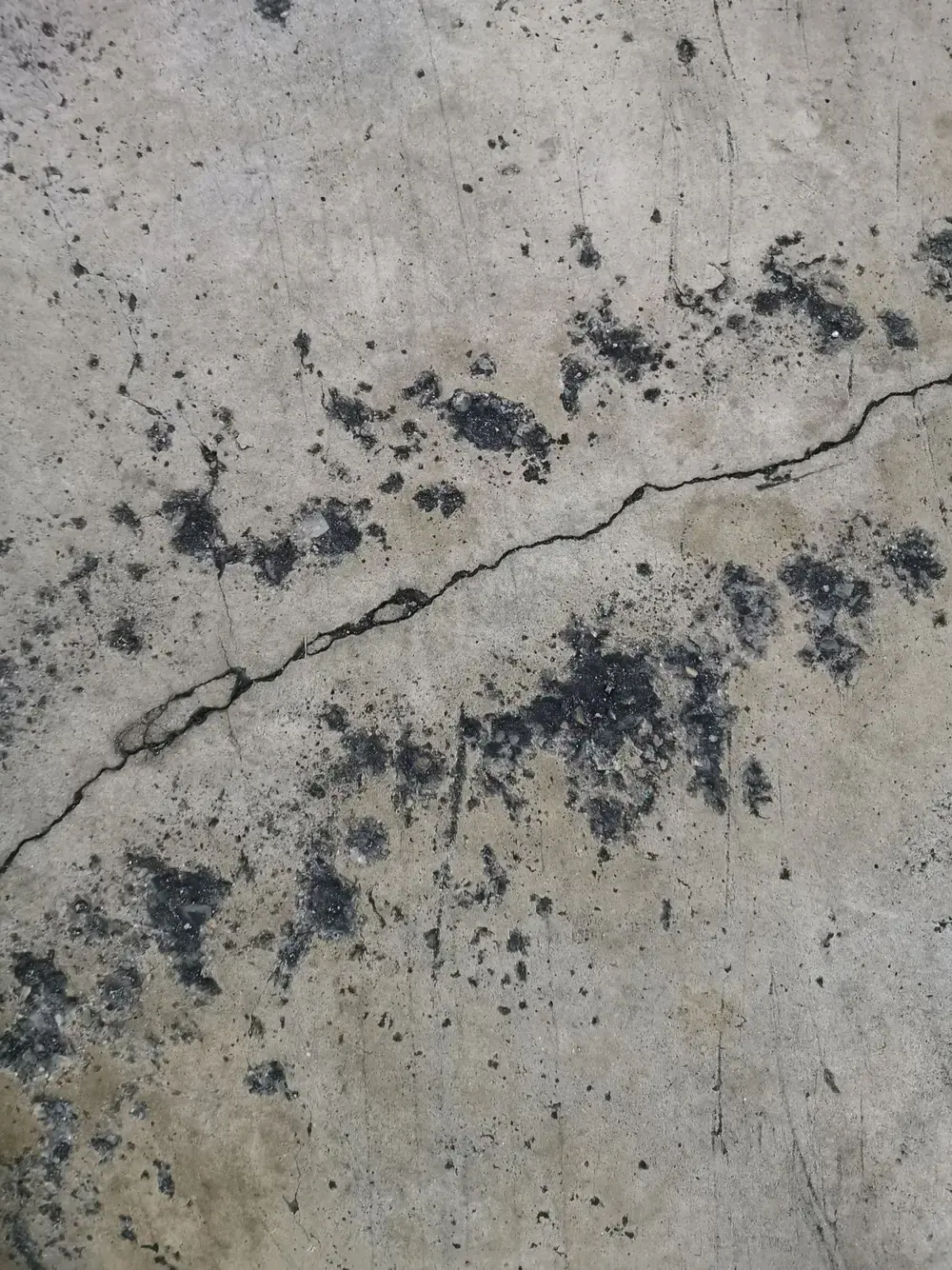
The direction, width and shape of a crack say a lot about what caused it. This is how we read them:
- Thin vertical cracks in a poured wall. Concrete shrinks as it cures, and a hairline crack running up the wall is common. It's rarely structural, but it is a path for water, and plenty of leaks start at one.
- Diagonal cracks from a corner or a window. These often come from settling or from stress around an opening. A thin one can be sealed; one that keeps widening needs a closer look.
- Horizontal cracks. A crack running sideways along a wall usually means soil pressure is pushing the wall in. Sealing it won't stop that. It's a foundation repair job.
- Stair-step cracks in block. Cracks that climb through the mortar joints of a block wall point to the wall moving or a corner settling.
- Cracks with an offset. If one side of the crack sticks out past the other, or the crack is much wider at one end, part of the wall has shifted.
A pencil mark at each end of a crack, with the date beside it, is the simplest test: if the crack grows past the mark by next season, it's still moving.
Where Basements Leak: Wall Cracks, Cold Joints and Floor Cracks
In March 2026, after a stretch of heavy rain, we posted the places we kept finding water coming in: foundation wall cracks, failing garage door seals, cold joints in concrete, basement floor cracks, and window wells and block walls. Three of those are crack problems.
Foundation wall cracks
Water in the soil outside presses against the wall, and the wetter the soil, the harder it presses. A crack that goes all the way through gives that water a straight path in. It shows as a dark stripe after rain, a trickle at the bottom, or white mineral crust left when the water dries.
Cold joints
A cold joint forms where fresh concrete was poured against concrete that had already set: where the wall sits on the footing, where the floor meets the wall, or partway up a wall when a pour was interrupted. The two pours never fully bond, so the joint is a seam water can follow. Water collecting against the footing rises along the joint at the base of the wall and spreads across the floor, so a basement can be wet along one wall with no crack in sight.
Basement floor cracks
Floor slabs crack as they shrink, and most of those cracks stay dry. They leak when the ground water under the house rises. The USDA soil survey finds the water table within 2 ft of the surface at some point in the year on 42.6% of Fayette County's acres, and that water pushes up on the slab from below. A floor crack that seeps in spring and dries out by August is usually that.
Poured Concrete vs Block Foundation Walls
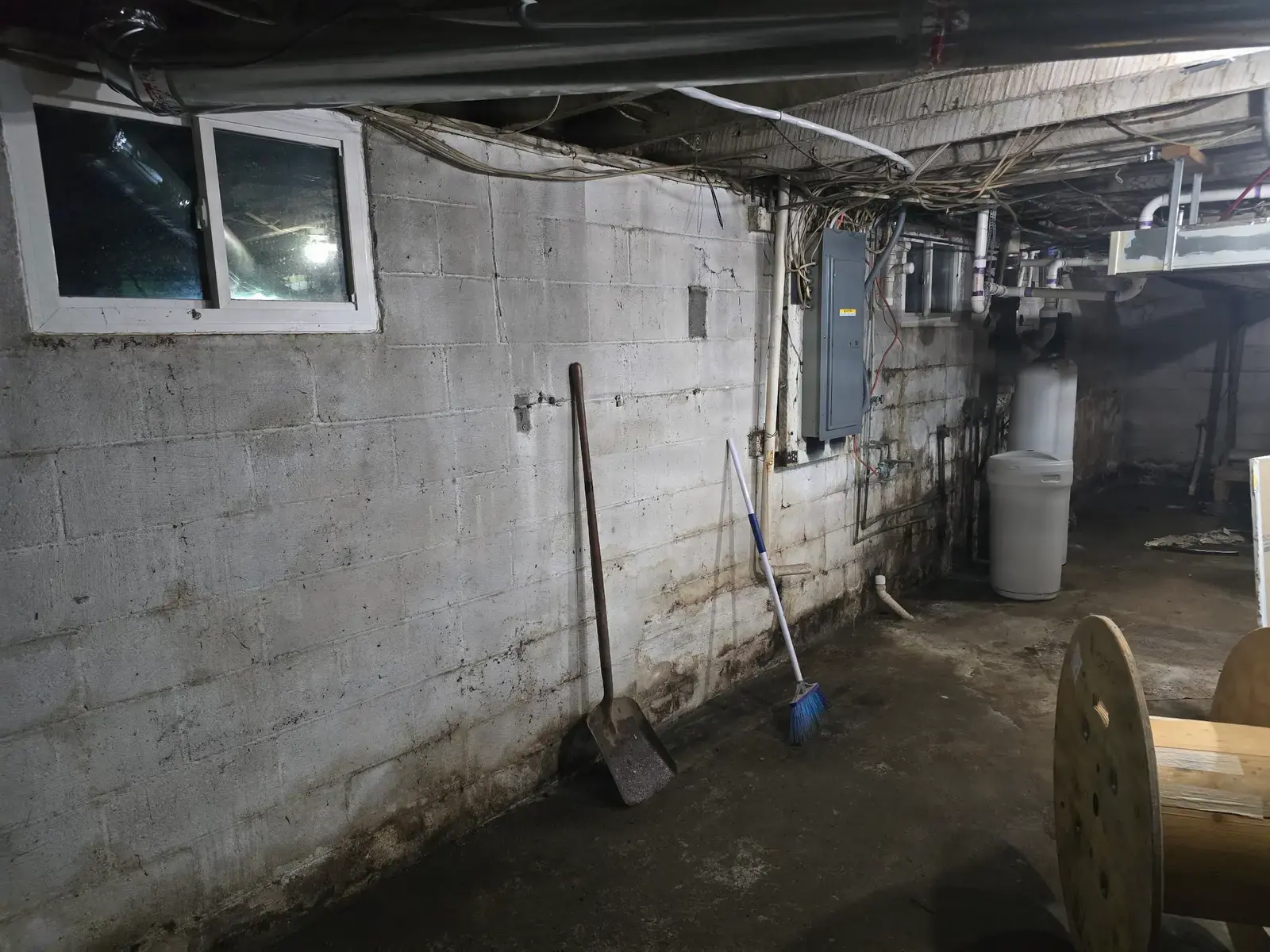
Crack repair depends on what the wall is made of. A poured concrete wall is one solid piece, so a crack in it is a single, defined path. Seal that path all the way through and the water has to look for another way in.
A block wall is different. Concrete blocks are hollow, and water that gets into the cores sits there, then weeps out through mortar joints, small cracks and the bottom course. Sealing one crack in a block wall often just moves the leak to the next joint. When a block wall leaks in many places, the lasting answer is usually to manage the water instead: an interior drain at the base of the wall that takes in what comes through the cores and carries it to a sump pump. Our basement waterproofing page explains how that works.
Older houses add stone and brick foundations, laid in soft mortar that washes out over the years. More than half of the homes in Uniontown, Connellsville and Scottdale were built before 1950, so plenty of basements here have walls like that, and on them the fix leans on drainage and the joints rather than injection.
How Basement Wall Crack Repair Is Done
Several methods are standard in the trade, and the right one depends on the wall, the crack and whether it's still moving:
- Polyurethane injection. A resin is pumped into the crack through small ports set along its length. It reacts with water, expands to fill the crack through the thickness of the wall and stays flexible. It's the usual choice for a leaking crack in a poured wall, and it can go in while the crack is damp.
- Epoxy injection. Epoxy fills the crack and bonds the concrete on both sides back together. It sets hard, so it's used on dry, stable cracks where the aim is to restore the bond as well as stop water. This is what people mean by foundation crack repair epoxy.
- Exterior sealing. Digging down to the crack outside and sealing it there with a membrane stops the water before it reaches the wall. It's more work, and it makes sense when the outside needs waterproofing anyway.
- Reinforcement. A crack that comes from movement gets the movement dealt with first. On a bowing or cracked wall, that often means carbon fiber straps.
- Drainage. Floor cracks, the joint at the base of the wall and leaking block walls are usually handled by draining the water away rather than sealing every opening.
Pennsylvania's building code asks for the same idea in new houses: "In areas where a high water table or other severe soil-water conditions are known to exist, exterior foundation walls ... shall be waterproofed". Most older basements around here were never built that way, so a crack is often where the missing protection first shows.
Cracks, Coal Mines and When to Call Someone Else
Around here, one more question comes before any repair: is the ground under the house moving? Fayette County sits on the Pittsburgh coal seam, and about 31.7% of its area lies in PA DEP's "Underground Mining Area". Cracks from mine subsidence look different from the slow cracks of wet soil and shrinking concrete. They show up suddenly, several at once, often with doors and windows that stop closing. If that's what you're seeing and your home is over mined ground, call DEP's mine subsidence program before anyone repairs anything. We repair cracks; we don't diagnose mine subsidence.
Freeze-thaw is the slower threat. The Uniontown weather station averages about 103 days a year that freeze and thaw again, and water caught in an open crack freezes and widens it a little each time. That's why our own advice on this is short: foundation cracks can be fixed before they become costly repairs.
A crack that is wide, shifted, or part of a wall that's clearly moving is a question for a structural engineer, and we'll say so when we see one. Honest, straightforward advice. No pressure, no scare tactics. If water has been coming in for a while, we also handle what it leaves behind, including mold removal on damp drywall and framing. Call (724) 912-8151 to have us look at yours.
Seeing Water at a Foundation Crack?
Call (724) 912-8151 for a free estimate.
Questions We Hear a Lot

-
Thin vertical cracks in poured concrete are common and usually come from the concrete shrinking as it cured. They still matter if they leak. Horizontal cracks, stair-step cracks in block and cracks with one side pushed out are not normal wear: they point to the wall moving.
-
They do different jobs. Polyurethane expands, stays flexible and works on damp, leaking cracks. Epoxy sets hard and bonds a dry, stable crack back together. A crack that is still moving needs the movement dealt with before either one.
-
Because the ground water under the slab is highest then. In much of Fayette County the water table comes within 2 ft of the surface at some point in the year, and that water pushes up through floor cracks and the joint at the base of the walls. Drainage along the walls usually handles it better than sealing each crack.
-
Single cracks, yes, but a block wall is hollow, and water in the cores often comes out somewhere else. When a block wall leaks in several places, an interior drain and a sump pump that carry the water away are usually the lasting fix.
-
A basement waterproofing company. We look for where the water is coming in, whether that's a wall crack, a cold joint, the floor, a window well or the gutters, and tell you what it takes to stop it. Call (724) 912-8151 for a free inspection.
-
Yes. Inspections and estimates are free. Call (724) 912-8151 or use the contact form, and we'll come look at the problem and tell you what we'd do.
-
We're based in Hopwood, PA, and serve Fayette County and the surrounding areas of Southwestern Pennsylvania, including Uniontown, Connellsville and Mount Pleasant. Call (724) 912-8151 to check your location.
-
- Service Area Fayette County, PA &
surrounding areas - Working Hours Open 24 hours7 days a week
-


