 Call: (724) 912-8151


-
Family-Owned
Locally and family-owned in Hopwood, serving Fayette County and surrounding areas.
-
Free Estimates
Licensed & insured, PA203391. Call (724) 912-8151 for a free estimate.
 Family-Owned
 Free Estimates
Crawl Space Repair & Support Beams
When a floor starts to sag, bounce or slope, the problem is usually underneath it: a support beam that's cracked or rotting, joists that have gone soft, or posts that have sunk. KAE Solutions does crawl space repair and support beam installation, repair and replacement for homes and commercial buildings across Fayette County and Southwestern Pennsylvania. We fix the wood that holds the floor up, and the moisture that ruined it. Inspections and estimates are free: call (724) 912-8151.
Signs of a Sagging Floor or a Failing Support Beam
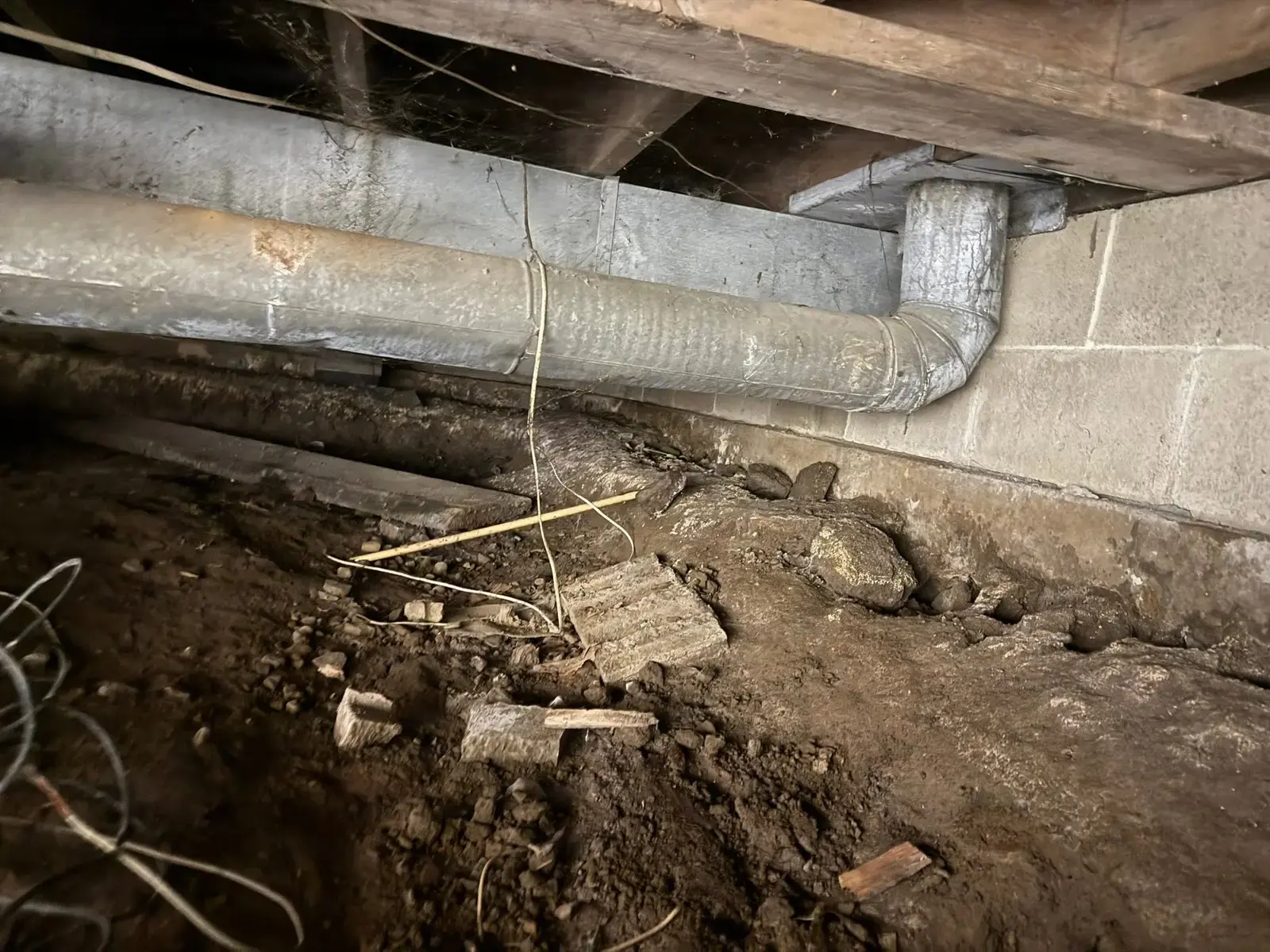
From upstairs, the signs are easy to feel and hard to explain:
- A floor that dips or slopes, often toward the middle of the house, where the main beam runs.
- Bouncy or springy floors when you walk across a room, or dishes rattling in a cabinet.
- Doors that stick or swing on their own, and gaps opening above door frames or between the floor and the baseboard.
- Cracks in drywall or plaster running from the corners of doors and windows.
Underneath, in the crawl space or the basement, we look for the cause:
- Wood rot in the beam, the joists or the sill plate that sits on top of the foundation wall. Rotted wood is dark and soft, and it breaks apart under a screwdriver.
- A beam that's cracked, split or sagging between its posts, or joists that have been notched or cut for pipes and ducts over the years.
- Posts that have sunk or rotted at the base, or old wood posts standing on bare dirt or on a wet floor.
- Moisture: damp soil, water on the old plastic, mold and mildew on the wood, a musty smell, insulation hanging loose.
Why Crawl Space Wood Rots in Southwestern PA
Wood rot needs moisture, and crawl spaces here get plenty of it. The ground under the house is often wet: the USDA soil survey lists ground water near the surface as a limitation on 49.1% of Fayette County's soil acres. Bare dirt gives that moisture off into the crawl space all year. On top of it come the 44.35 inches of precipitation a year in NOAA's normals for the Uniontown station, much of it soaking into the soil right against the foundation.
As our January 2026 post put it: "Melting snow and saturated soil can push moisture into unprotected crawlspaces, leading to mold, wood rot, and long-term structural issues." The wood closest to that moisture goes first: the sill plate on the foundation wall, the ends of joists resting in damp masonry, and the bottoms of the posts.
Age adds to it. Uniontown's and Connellsville's median home was built in 1942, and Brownsville's in 1938. Many of those houses still sit on the beams and posts they were built with, after more than eighty years of wet springs, added rooms and joists cut for plumbing. Crawl spaces under older homes and their additions were rarely given a ground cover or any moisture control at all.
“The Kae team absolutely killed a project for me can’t thank these guys enough! Looking forward to getting more work done in the future!”
Nate L., Thumbtack review
Support Beam Installation, Repair and Replacement
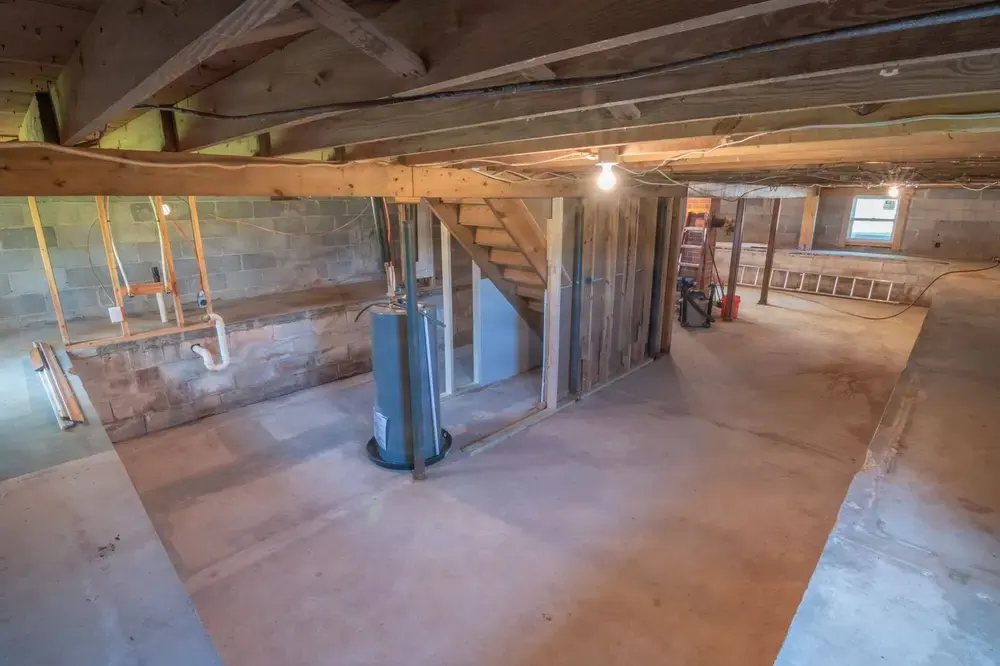
We describe this work as crawlspace remediation and support beam replacement: fixing sagging floors and wood rot and restoring the foundation's integrity, for residential and commercial buildings. The repair depends on what failed, but the work follows the same order:
- Support the floor first. Temporary jacks and cribbing go in beside the damaged beam or joists, so nothing drops while the old wood comes out.
- Lift slowly. A floor that has sagged for years has walls, trim, doors and pipes that settled with it. Raising it too fast cracks plaster and tile, so it comes up a little at a time.
- Replace or reinforce the wood. Rotted sections of beam and sill plate come out and new lumber goes in. Weak joists are often sistered: a new full-length joist is fastened alongside the old one so the two carry the floor together.
- Add support where it's missing. A beam that sags between posts may need a new post in between, set on a proper footing instead of on bare dirt or a thin slab.
- Fix the moisture. New wood in the same wet crawl space will rot the way the old wood did, so the repair isn't done until the moisture is under control.
The same work applies in basements. A main beam in an old basement often rests on wood posts standing on a damp floor, and the bottoms of those posts rot first. Replacing them with posts on solid footings is a common support beam job.
Where a beam has broken, the floor has dropped a long way, or the repair changes how the house carries its weight, a structural engineer should look at it first, and we'll tell you when we think that's the case. We believe in honest work and doing the job right the first time, and that starts with knowing what the floor actually needs.
Crawlspace Remediation: Moisture, Mold and the Vapor Barrier
Fixing the wood without fixing the air around it only buys time. Our crawlspace remediation covers moisture control, mold and mildew removal, vapor barrier installation and insulation upgrades, so the new wood stays dry:
- Water first. If water runs into the crawl space, it needs a way out: a drain, a sump pump, or gutter lines and grading outside that keep roof water away from the foundation. Our drainage systems page covers the outside work.
- Mold and mildew off the wood. Joists and subfloor with mold growth are cleaned and treated, and wood that's too far gone is replaced. Our mold removal page explains how.
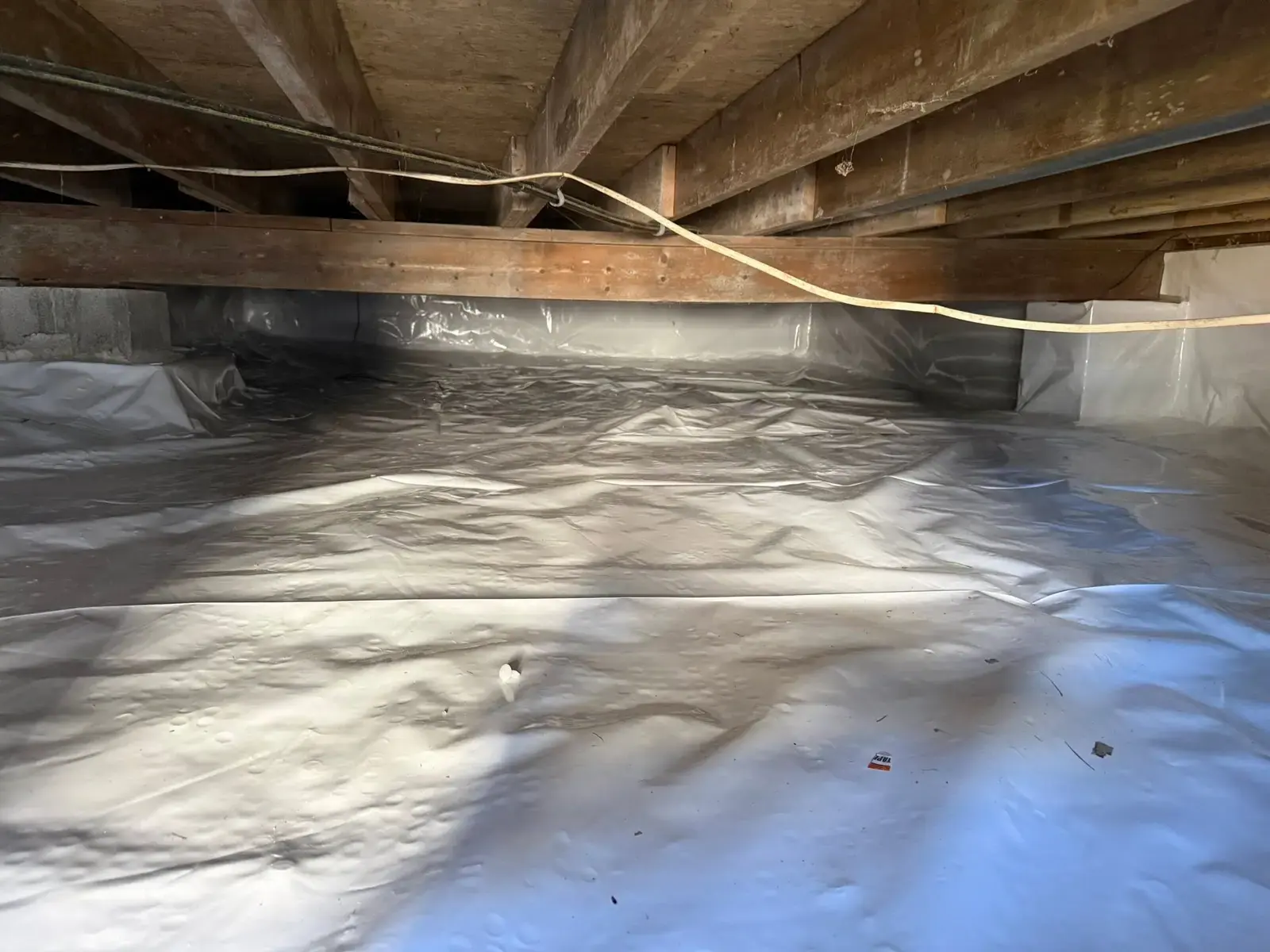
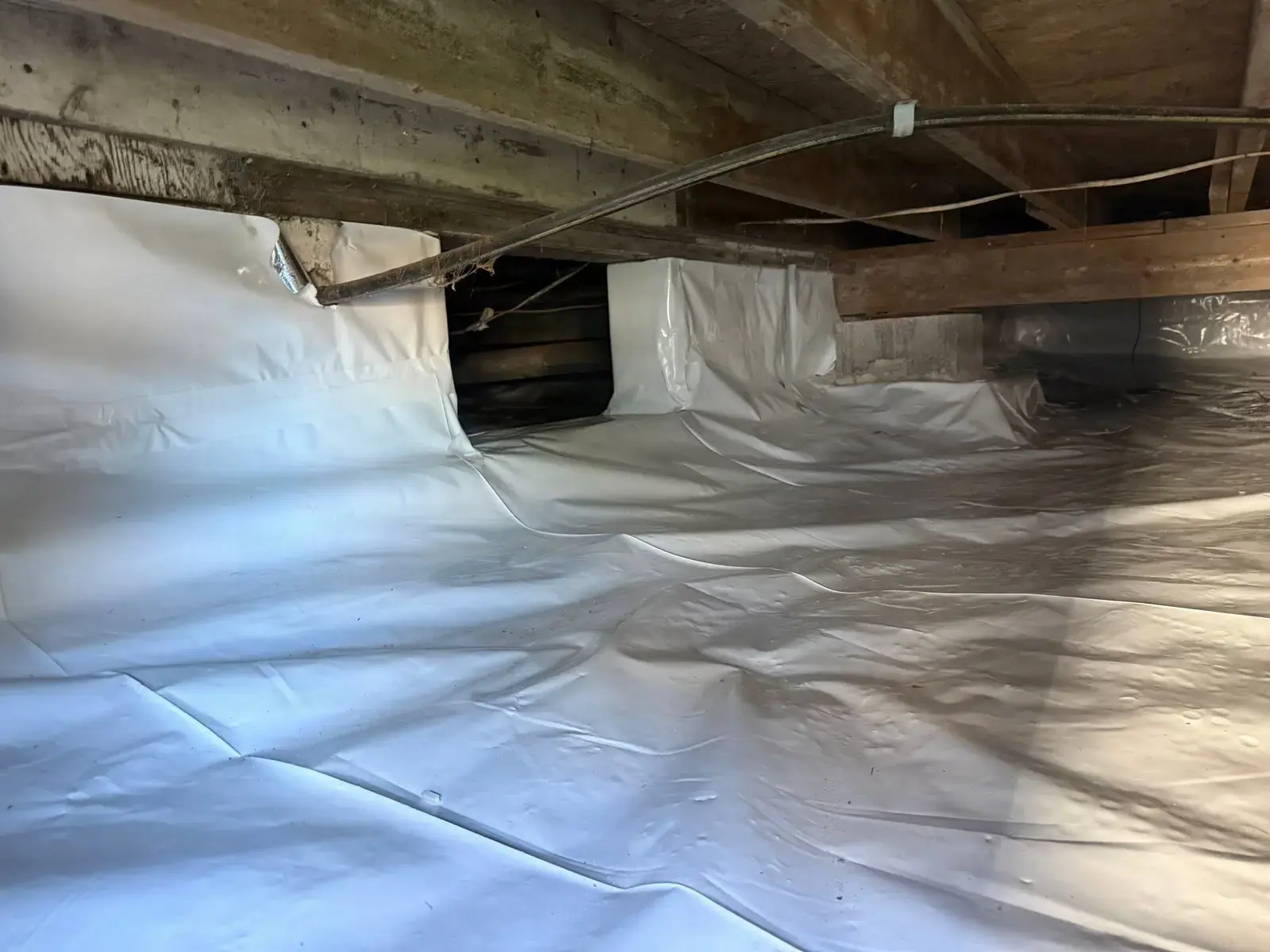
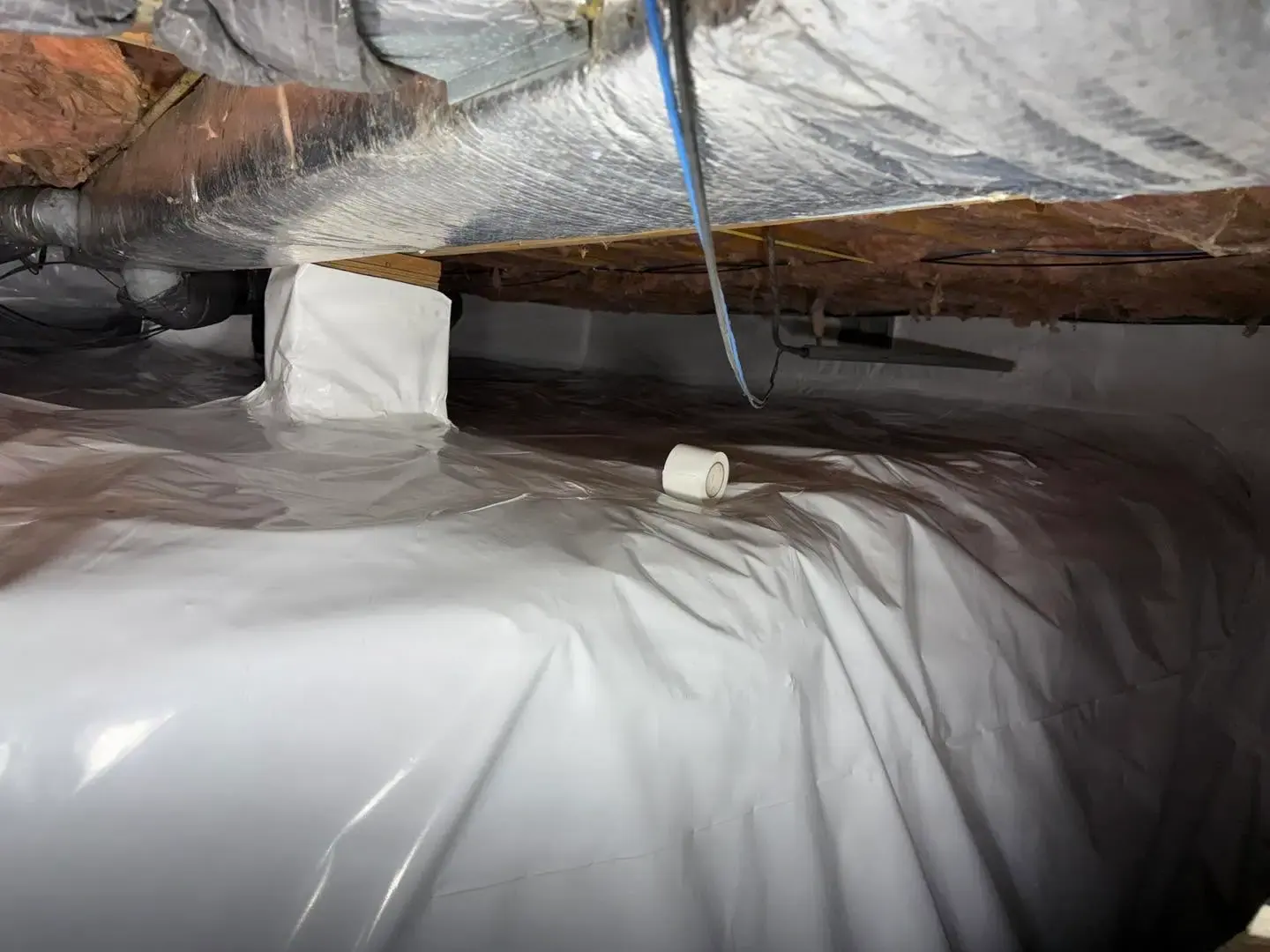
- A vapor barrier on the ground. A plastic liner over the dirt keeps the soil's moisture from rising into the crawl space. For an unvented crawl space, Pennsylvania's building code says: "Exposed earth shall be covered with a continuous Class I vapor retarder. Joints of the vapor retarder shall overlap by 6 inches (152 mm) and shall be sealed or taped."
- Insulation upgrades. Wet, fallen batts come out, and the space is insulated so it stays drier and the floors above stay warmer.
Crawl Space Repair First, Then Encapsulation
Encapsulation goes a step further than a vapor barrier. The vents are sealed, the walls are covered as well as the ground, and the space is closed off from outside air and kept dry. It's often the right finish after a beam or sill repair, because it protects the new wood. It comes second, though: the structure and the water come first, and then the space gets sealed. Our crawl space encapsulation page explains the whole process and when it's worth doing.
Protect your home from the ground up. We serve homes and businesses in Hopwood, Uniontown and across Fayette County. If a floor is sagging or the crawl space smells musty, call (724) 912-8151 for a free inspection, or tell us about it on the contact page.
Floors Sagging or Bouncing?
Call (724) 912-8151 for a free estimate.
Photos From Our Jobs
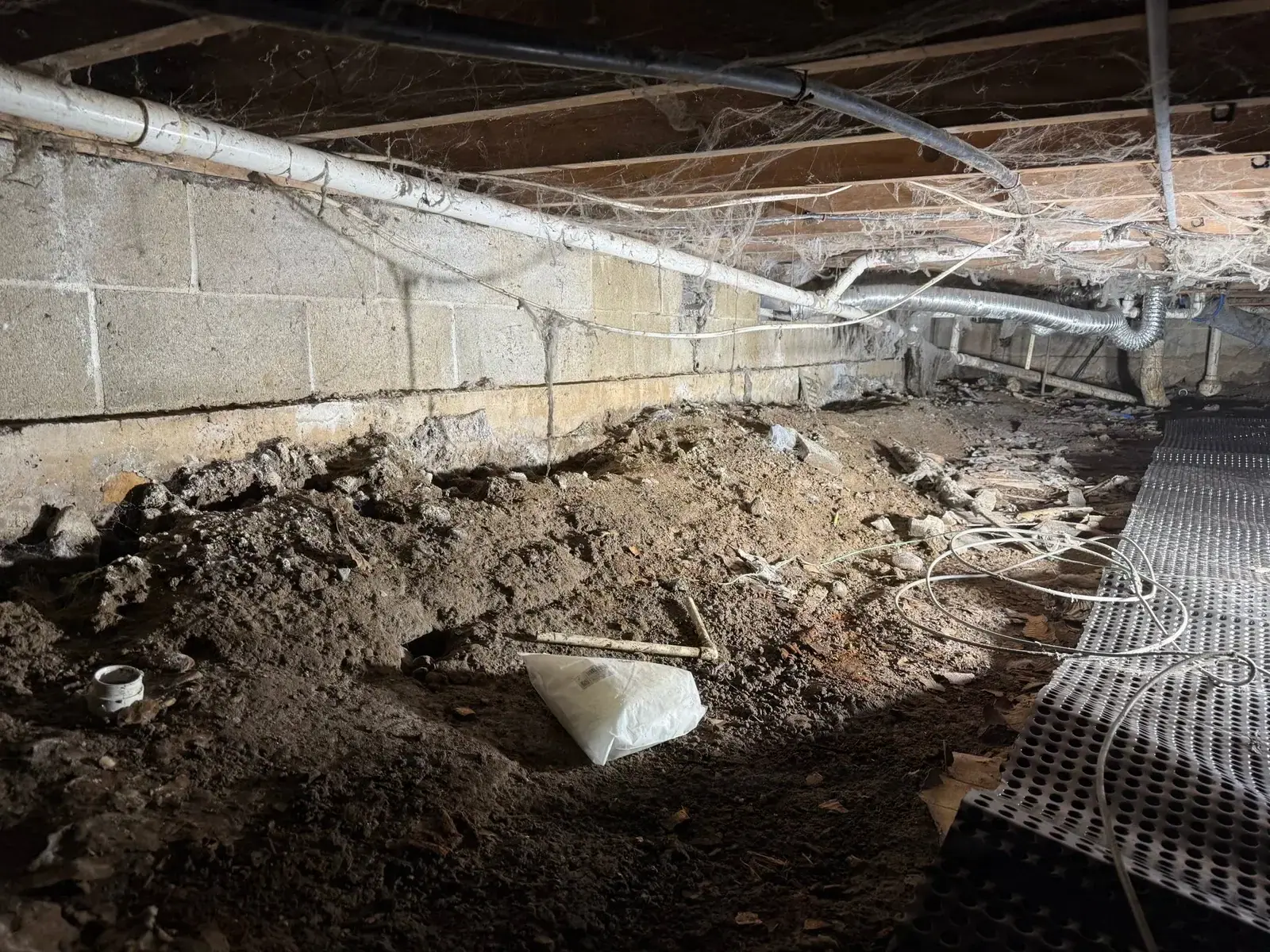
Every photo here is from one of our own jobs. Tap one to see it bigger.


Questions We Hear a Lot

-
First we find out why it sags: a rotted or cracked beam, weak or cut joists, or posts that have sunk. The floor is held on temporary jacks and lifted slowly, and the failed wood is replaced or reinforced. Then the moisture that caused the rot gets fixed, so the new wood stays dry.
-
Sistering means fastening a new full-length joist alongside a weak, cracked or sagging one, so the two carry the floor together. It's a common repair when a joist has been notched, has split or has gone soft along part of its length, and it avoids tearing out the floor above.
-
Yes. The floor is held up on temporary supports while the old beam or posts come out and new ones go in, with the posts set on solid footings. A broken beam, a big drop in the floor, or a change in how the house carries its weight should be looked at by a structural engineer first.
-
A vapor barrier covers the ground so the soil's moisture stays under it. Encapsulation also seals the vents and covers the walls, closing the crawl space off from outside air. We repair the wood and the water problems first, then tell you which of the two your crawl space needs.
-
Yes. Our crawlspace remediation and support beam work is for residential and commercial properties. Call (724) 912-8151 and tell us about the building.
-
Yes. Inspections and estimates are free. Call (724) 912-8151 or use the contact form, and we'll come look at the problem and tell you what we'd do.
-
We're based in Hopwood, PA, and serve Fayette County and the surrounding areas of Southwestern Pennsylvania, including Uniontown, Connellsville and Mount Pleasant. Call (724) 912-8151 to check your location.
-
- Service Area Fayette County, PA &
surrounding areas - Working Hours Open 24 hours7 days a week
-


